Muscle Soreness After a Workout: What Helps, What Doesn't
That stiff, achy feeling one or two days after exercise has a name and a timeline. What actually speeds up recovery, what the evidence does not support, and the red flags that are not normal soreness.
By the Wellspring Daily editorial team · How we check our guides
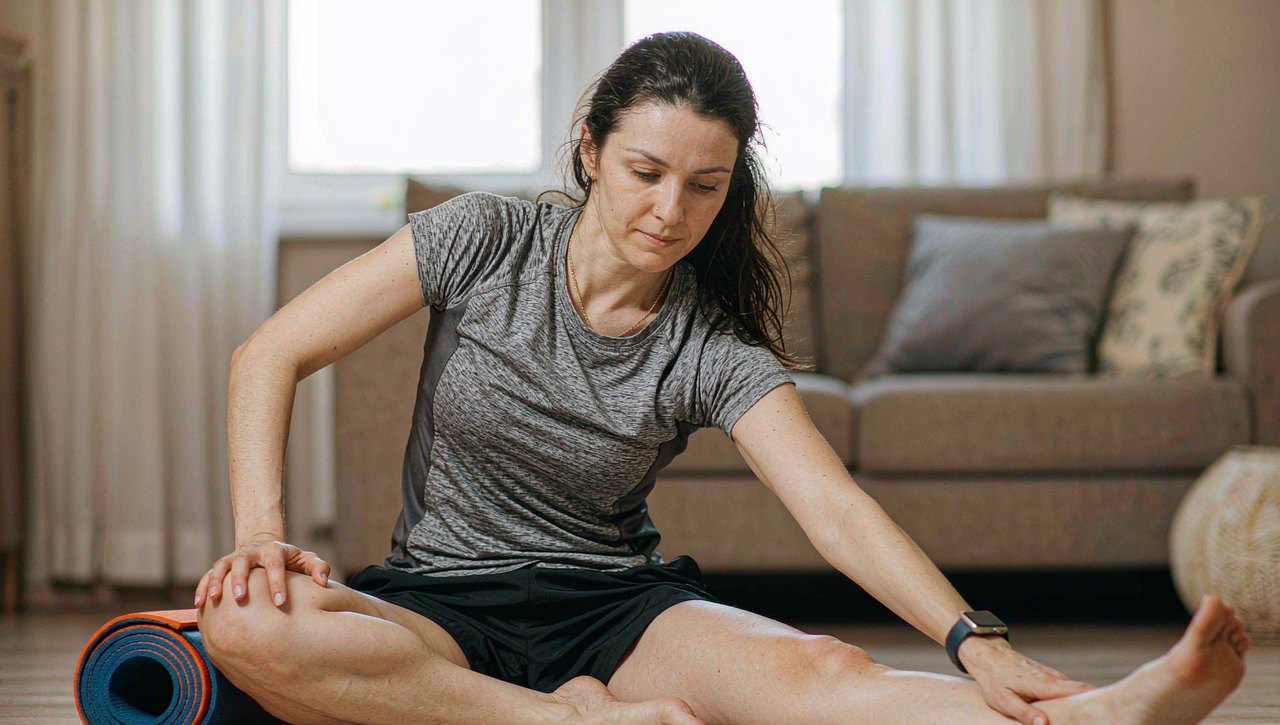
You did a workout on Monday. Tuesday you felt fine. Wednesday morning, your thighs staged a protest and sitting down on the toilet became a carefully negotiated operation. This delayed pattern is so common it has a name: delayed onset muscle soreness, usually shortened to DOMS. It typically peaks between 24 and 72 hours after exercise you are not used to, and it fades over the next few days. This article walks through what is actually happening in the muscle, what genuinely helps you feel and recover better, what the evidence does not really support, and — importantly — how to tell the difference between normal soreness and pain that deserves a professional's attention.
Why soreness shows up two days later, not right away
The two-day delay confuses people, so it is worth understanding the mechanism. DOMS is mostly associated with eccentric muscle actions — moments when the muscle lengthens under tension. Lowering yourself into a squat, running downhill, lowering a dumbbell slowly, walking down stairs after a long break: these are eccentric movements. They produce small, localized micro-damage in muscle fibers and the surrounding connective tissue. Your body then mounts a mild inflammatory response, and the chemicals involved in that response sensitize the nerve endings in the muscle. The result is the dull, widespread, both-sides ache you feel when you move or press on the muscle.
Two myths are worth retiring here. First, soreness is not caused by lactic acid. Lactate produced during exercise clears from your blood and muscles within roughly an hour of finishing, long before DOMS peaks. Second, soreness is not a reliable scoreboard. You can build strength and fitness with little soreness, and you can be extremely sore from a single unaccustomed session without having done anything productive. Soreness mainly tells you that you did something new or more intense than usual — not that the workout was better.
What actually helps
None of these methods erase DOMS overnight, but they shorten the miserable window and support the adaptation the workout triggered.
Keep moving, gently
It sounds backwards, but the most consistently supported remedy for sore muscles is light movement. Easy walking, gentle cycling, a casual swim, or mobility work increases blood flow to the sore tissue without adding meaningful damage. Most people notice that the first few reps or minutes feel stiff and achy, then the muscle loosens up as it warms. A practical rule: if you are sore, do the same activity type at maybe a third to half your normal intensity, or target completely different muscle groups. A 20 to 30 minute brisk walk on a sore-legs day does more for how you feel by tomorrow than another hour on the couch.
Sleep like it is part of the workout
Muscle repair happens largely during sleep, when growth hormone release peaks and your body directs resources toward tissue maintenance. A couple of short-sleep nights in a heavy training week reliably makes soreness feel worse and lasts longer. If you have an unaccustomed workout day, treat that night's sleep as part of the session. Our guide on sleeping better tonight covers the basics, and rest days and recovery explains how to schedule them so soreness does not pile up session after session.
Protein spread across the day
You do not need a special post-workout window or an expensive supplement stack. What matters across the whole day is enough total protein — commonly estimated at roughly 1.2 to 1.6 grams per kilogram of body weight per day for regularly active people — spread over meals. Our breakdown of how much protein you actually need shows the arithmetic with real foods. None of this prevents DOMS, but repairing muscle is literally the project your body is working on, and raw materials help.
Progress gradually so soreness stays mild
The surest way to tame DOMS is to stop producing extreme versions of it. The classic guideline is to increase training volume or load by no more than about 10 percent per week, though the exact number matters less than the principle: small, regular steps. If you have taken three months off, do not restart with the routine you remember from your last week of training. Cut the weights, distances, or durations roughly in half for the first week or two and rebuild. The fitness comes back faster than you expect; the four-day DOMS from an overambitious restart is real and avoidable. For a structured starting point, our beginner core routine and bodyweight home workout are deliberately built to be repeatable without wrecking you.
Warm up properly every time
A warm-up does not prevent DOMS on new exercises, but it reliably reduces how bad the session itself feels and lowers the strain on cold, stiff tissue. Five to ten minutes of easy cardio plus a few light practice sets of the exact movement you are about to load is enough. We have a full walkthrough in how to warm up before a workout.
What the evidence does not strongly support
These are not dangerous for most people, but you should know what you are buying.
Static stretching before or after exercise. Stretching feels good and preserves flexibility, but study after study has found it does not meaningfully prevent or reduce DOMS. Save long static holds for their own flexibility sessions, and keep pre-workout stretching brief and dynamic.
Ice baths and cold plunges. Cold water immersion can lower perceived soreness in the short term, which is why athletes love it between competitions. But some research suggests it may blunt the strength and muscle adaptations you trained for, because part of the soreness-and-inflammation process is also part of the adaptation signal. If you enjoy cold plunges, fine — just do not treat them as a recovery cheat code on a regular training week.
Routine painkillers. Reaching for ibuprofen at the first sign of soreness is a habit worth questioning. Taken occasionally for a headache, no problem. Taken habitually around every workout, nonsteroidal anti-inflammatory drugs may interfere with the muscle-building response, and masking pain can lead you to load tissue that is still repairing. Reserve medication for when you actually need it, and read the label.
Fancy gadgets. Massage guns, compression sleeves, and foam rollers all produce small, short-lived reductions in perceived soreness — basically a pleasant massage effect. If you like the ritual and it is in budget, enjoy. None of them outperforms a walk, a good night's sleep, and sensible progression.
A realistic sore-week schedule
Here is what a sensible week looks like when you have overdone Monday's legs session:
Tuesday (peak soreness arriving): no training, extra walking, normal meals, early bedtime. Wednesday (peak soreness): 20 to 30 minutes of easy walking or upper-body mobility, nothing leg-heavy. Thursday: soreness clearly receding; a light leg session with half your usual weight or volume works fine — gentle loading usually feels better than more rest. Friday onward: back to your normal plan, with next week's leg volume only slightly above this one. Notice the shape of this: you do not wait until all soreness is gone to move, and you do not punish the same muscles immediately either.
When it is not normal soreness
DOMS has a consistent signature: dull, symmetric or workload-matching, worst when the muscle stretches or contracts, peaking around day two, clearly improving by day four or five. See a doctor promptly if any of these appear instead:
- Sharp, stabbing, or highly localized pain — one precise spot in one muscle, or pain in a joint rather than the muscle belly — which suggests a strain or injury rather than DOMS.
- Noticeable swelling, severe weakness, or a muscle that looks deformed.
- Pain that is still worsening after three to four days instead of improving, or soreness that lasts beyond a week.
- Dark brown or cola-colored urine, extreme weakness, or vomiting after a very intense or first-ever session. This combination can signal rhabdomyolysis, a rare but serious breakdown of muscle tissue that needs urgent medical care. It is uncommon, but extreme first sessions — especially in heat — are the classic trigger.
None of these red flags should be managed with more stretching and ibuprofen at home. When in doubt, an urgent care visit costs an hour and settles the question.
The bottom line
Muscle soreness after exercise you are not used to is a normal, temporary signal — not damage you must nurse, and not a badge you must chase. Move gently, sleep, eat enough protein across the day, and increase your training in small steps so DOMS stays a two-day footnote instead of a four-day saga. Respect the red flags, and let everything else be a sign that your body is busy adapting.
More practical guides are in the Wellspring Daily blog index, including our desk stretches for office workers if long sitting days are also part of your week.
This article is general health information, not medical advice. Soreness patterns vary with age, medications, and health conditions. If you have a diagnosed medical condition, take medications that affect muscles, or are unsure whether your pain is normal, consult a qualified healthcare professional before continuing to exercise.
A note on health advice
This guide shares general wellbeing information based on published guidance and personal testing. It is not medical advice. If you have a condition, are pregnant, or feel pain during any movement, check with a qualified professional before starting.