Home Workouts Without Equipment: A 20-Minute Beginner Routine
A complete beginner-friendly strength and mobility routine you can do in a living room with no equipment: how to scale every movement, why walking beats killing yourself in week one, and how to recover.
By the Wellspring Daily editorial team · How we check our guides
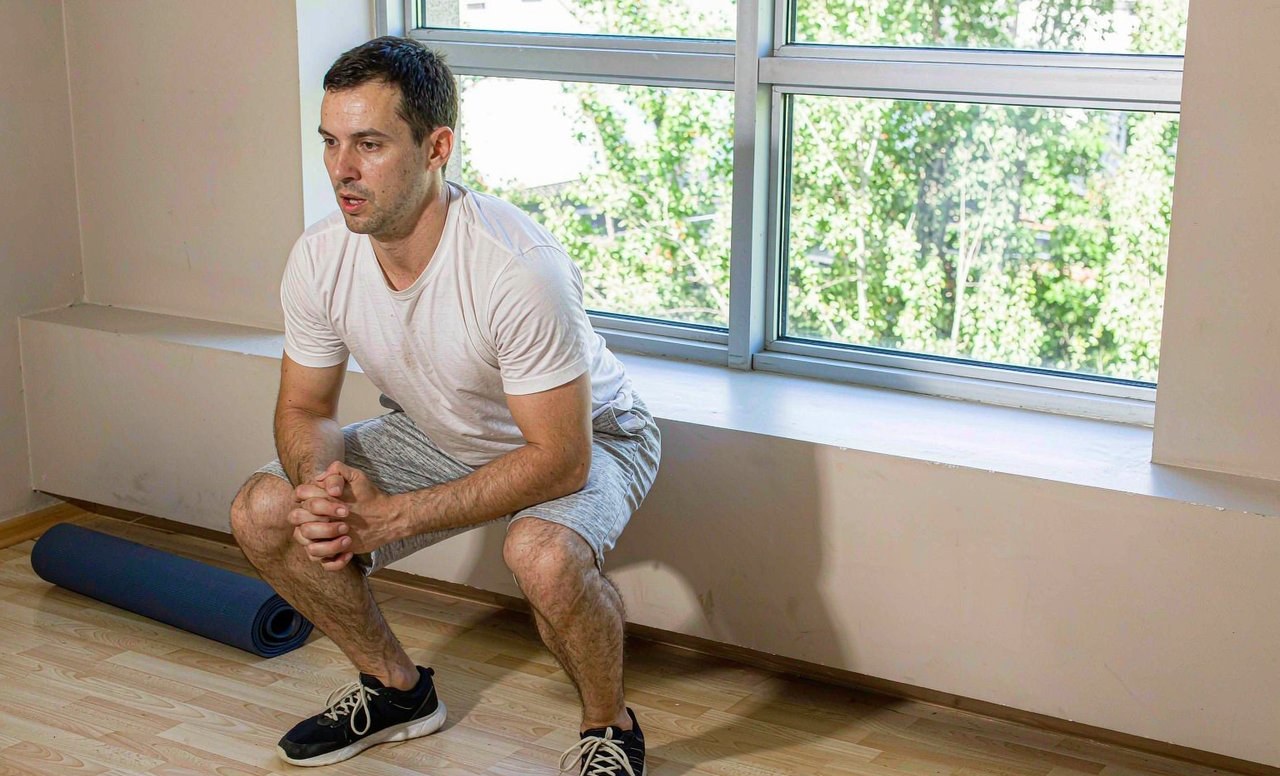
You do not need a gym, a subscription, or a rack of equipment to get meaningfully stronger. You need a routine that is short enough to actually do three times a week, movements you can scale to your current level, and a way to make it gradually harder. That is the whole recipe — everything else is decoration.
This guide gives you a complete twenty-minute bodyweight routine, explains how to adjust every movement, and covers the parts people skip: warming up, progressing over weeks, and recovering well enough to keep going.
Why bodyweight strength works
Your muscles respond to resistance and to being challenged close to their limit. Bodyweight exercises provide real resistance — you are moving a substantial fraction of your own body weight in every squat, push-up and lunge. The trick is that the resistance is fixed, so progress comes from changing leverage, adding range, slowing the movement down, or adding reps rather than from stacking plates on a bar.
That is not inferior — it is just a different dial. For a beginner, the limiting factor is almost never the size of the load. It is consistency, technique, and not getting injured in week one.
The routine: 20 minutes, three times a week
Do this on non-consecutive days — for example Monday, Wednesday and Saturday. Warm up first, then run through the five movements below. Rest 45 to 60 seconds between sets, and a little longer if you need it.
- Bodyweight squats — 2 sets of 8 to 12
- Incline or knee push-ups — 2 sets of 5 to 10
- Hip bridges — 2 sets of 10 to 15
- Split squats or step-ups — 2 sets of 6 to 8 per leg
- Dead bug or bird dog — 2 sets of 6 to 8 per side
That is ten working sets, which is plenty for a beginner. If you finish feeling like you could have done more, add one rep next session rather than adding five new exercises — the ability to add reps is the point of a routine this simple.
The warm-up you should not skip
Five minutes, in this order, no equipment needed. Cold muscles and stiff joints are what turn a simple squat into a tweaked knee.
- March in place — 60 seconds, swinging your arms;
- Hip circles — 8 in each direction, hands on hips;
- Arm circles — 10 forward, 10 backward, small to large;
- Cat–cow — 8 slow reps on hands and knees, moving with your breath;
- Five bodyweight squats to a comfortable depth and five slow shoulder rolls to finish.
You are not trying to fatigue anything in the warm-up. You are raising your temperature and reminding your joints what they are about to do.
How to scale every movement
This is the part most beginner routines leave out, and it is why people quit. Every exercise here has an easier and a harder version. Start where you can complete all sets with good form and two reps still in the tank.
Squats
Easier: hold the back of a chair and squat to a seat, standing up slowly. Harder: pause for two seconds at the bottom, or add a small jump on the way up. Keep your knees tracking over your toes and your chest up — depth comes with time, not force.
Push-ups
Easier: put your hands on a kitchen counter or a sturdy table — the higher the surface, the easier. Or drop to your knees. Harder: lower the surface, slow the descent to three seconds, or elevate your feet. A push-up should feel like your whole body is one plank, not like your lower back is sagging.
Hip bridges
Easier: lift only halfway. Harder: pause at the top for three seconds, or lift one foot off the floor at a time. Squeeze your glutes rather than arching your lower back — if your back hurts, you are arching.
Split squats and step-ups
Easier: hold a wall for balance and shorten your range. Harder: use a higher step-up surface. These are the movements that reveal how much single-leg strength most people are missing, so keep them controlled and stop if your front knee collapses inward.
Dead bug and bird dog
These train your trunk to hold position while your limbs move — which is what your core actually does all day. Easier: move only your legs, keeping your arms still. Harder: slow everything down and extend further. Keep your lower back gently pressed toward the floor throughout.
How to progress over eight weeks
Write down what you did each session — reps, sets, and how hard it felt. Then apply one change at a time, in this order:
- Add reps until you hit the top of the range for every set;
- Slow the lowering phase to three seconds — this alone makes most movements noticeably harder;
- Increase range of motion — deeper squat, lower push-up, higher step;
- Move to a harder variation — incline push-up to floor push-up, two-leg bridge to single-leg;
- Add a third set for movements that still feel easy.
Then start again at step one. This is the entire concept of progressive overload, and it works without a single piece of equipment.
Walking: the underrated half of the plan
Strength training three times a week is excellent and it is not enough on its own. If you sit for most of the day, a thirty-minute walk on your off days does more for your energy, mood and joints than almost any other single habit. It is also the easiest way to get the morning daylight that helps your sleep, which in turn makes training easier.
Think of it as two systems: strength sessions build capacity, daily walking keeps everything moving. People who only do one tend to plateau.
Recovery: the part that makes it work
- Sleep — it is the single biggest recovery variable, and it costs nothing;
- Protein at each meal — you do not need powders or precision, just a real source of protein with most meals;
- Water — our daily water target gives a rough starting number;
- Mild soreness is normal for a few days after a new routine; sharp joint pain is not — stop and reassess;
- Deload every six to eight weeks — take a week at half the volume. You will come back stronger, not weaker.
Three mistakes that end home workouts
Doing too much in week one. The most common reason people quit is being so sore after session one that session two never happens. Start easier than feels satisfying.
Chasing variety. A new routine every week feels productive and produces no progress. Same five movements, gradually harder, for eight weeks.
Ignoring pain. Discomfort in a muscle is fine. Pain in a joint, a sharp pinch, or anything that lingers past a few days means change the movement or get it looked at.
Your first week
Do the routine three times. Use the easiest version of everything. Finish each session feeling like you could have done a bit more. That is a successful first week, and it is the week that decides whether you are still training in three months.
A note on health advice
This guide shares general wellbeing information based on published guidance and personal testing. It is not medical advice. If you have a condition, are pregnant, or feel pain during any movement, check with a qualified professional before starting.