How Much Protein Do You Actually Need Per Day?
Protein advice ranges from "barely any" to "a shake every meal." Here is what established guidelines actually say, how to translate grams into real food, and who needs more.
By the Wellspring Daily editorial team · How we check our guides
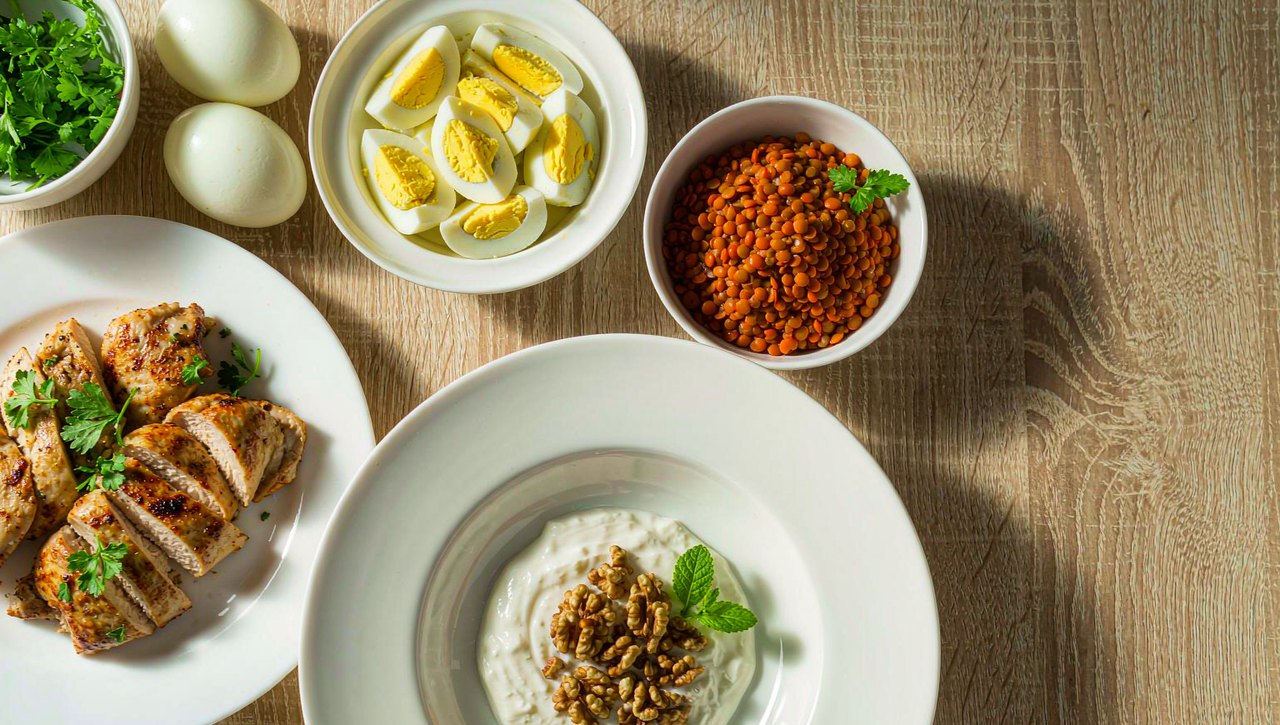
Ask five sources how much protein you need and you will get five different numbers, from the modest figure on food labels to gym-culture math that doubles it. The truth sits in between, it is well documented, and — more usefully — it translates into ordinary meals without a food scale becoming your personality. This article walks through what the established guidelines say, why the numbers differ, and how to hit a sensible target with real food, whatever your eating style.
The Number Behind the Labels
The figure most official bodies agree on is roughly 0.8 grams of protein per kilogram of body weight per day for average adults — about 0.36 grams per pound. For a 70 kg (154 lb) adult that is around 56 grams a day; for an 85 kg adult, about 68 grams. This is the amount associated with preventing deficiency in most healthy people, which is a floor, not a performance target. It is worth knowing mainly so you can recognize how far most people land from it in either direction: many sedentary eaters drift below it, while supplement marketing implies everyone needs three times as much.
Why Active People Aim Higher
Research on athletes and on older adults consistently points higher than the deficiency floor. Common ranges in the sports-nutrition literature land around 1.2–2.0 g/kg per day for people who train regularly, with most everyday strength and endurance enthusiasts doing well somewhere in the middle of that band rather than at its ceiling. Older adults are the other group that benefits from aiming above the floor: aging muscles use protein less efficiently, so guidance for people over 65 often suggests spreading protein evenly through the day and erring toward the higher end of the normal range. Two honest caveats: these are ranges for generally healthy people, not prescriptions, and more is not better without limit — the body simply does not bank surplus protein as extra muscle.
Translating Grams Into a Plate
Numbers on paper mean nothing until dinner. Here is what common portions actually contain, using typical published values (exact figures vary by cut, brand, and preparation):
- Chicken breast, 100 g cooked — roughly 30 g protein
- Egg, one large — about 6 g
- Greek yogurt, 170 g pot — roughly 15–17 g
- Lentils or beans, one cup cooked — roughly 15–18 g
- Tofu, 100 g firm — roughly 10–15 g
- Fish, 100 g cooked — roughly 20–25 g
- Milk, one cup — about 8 g
- A handful of nuts (30 g) — roughly 5–6 g
Run a quick mental experiment with a 70 kg adult targeting somewhere in the 84–105 g range on a training day: eggs at breakfast (12 g), yogurt as a snack (16 g), a chicken-and-lentil lunch (about 35 g combined), fish with dinner (25 g), plus incidental amounts from bread, vegetables, and milk — and the target is met without a single shake. A plant-based eater hits the same math with tofu, tempeh, legumes, soy milk, and whole grains; the strategic difference is simply that plant proteins arrive with less protein per bite, so portions need to be a little more deliberate. Our guide to reading nutrition labels shows how to verify the numbers on anything packaged.
Spacing It Through the Day
The body uses protein better when intake is spread out than when it arrives in one enormous dinner. A practical pattern many dietitians suggest is anchoring each meal with roughly 20–30 grams — the amount commonly associated with a good muscle-protein response per meal — and letting snacks contribute the rest. For people who skip breakfast entirely, lunch and dinner usually carry the whole load, which works, but a protein-aware breakfast (eggs, yogurt, leftover chicken, tofu scramble) makes the daily target far easier and tames mid-morning snack raids. The energy angle matters too: protein-rich meals tend to keep you fuller longer, which our guide to snacks for steady energy builds on directly.
Who Should Talk to a Professional First
Some situations genuinely change the math, and this is where general guidance must stop and personal advice should start. People with kidney disease are routinely advised to moderate protein intake; pregnant and breastfeeding women have elevated needs; and anyone managing a chronic condition, taking medications affected by diet, or considering high-dose supplementation should get individual guidance from a doctor or registered dietitian. Supplements are neither magic nor mandatory: whey or plant protein powders are simply convenient food, useful on heavy training days or low-appetite mornings, and entirely unnecessary if your meals already cover the target.
The Bottom Line in Three Sentences
Aim near 0.8 g/kg if you are healthy and mostly sedentary, and toward 1.2–2.0 g/kg if you train regularly or are older — with a registered dietitian personalizing it if you have any medical condition affecting diet. Build each meal around a palm-sized protein source and the arithmetic mostly takes care of itself. And treat anything selling you triple the evidence-based range with the skepticism it has earned.
The protein debate is loud because the extremes sell better than the middle. The evidence-based middle — roughly a gram per kilogram and change for active people, spread across meals — is achievable with ordinary groceries this week.
Pair this with our guide to how much water to drink daily and the meal-prep guide for beginners, and the "what do I actually eat" question shrinks to a five-minute weekly decision. More everyday nutrition and fitness guides live in the blog index; the tools page collects the calculators and checklists that go with them.
A Note on Health Information
This article provides general nutrition information and is not medical advice. Protein needs vary with age, health status, pregnancy, kidney function, and activity level; consult a doctor or registered dietitian for advice about your individual situation.
A note on health advice
This guide shares general wellbeing information based on published guidance and personal testing. It is not medical advice. If you have a condition, are pregnant, or feel pain during any movement, check with a qualified professional before starting.