Woke Up at 3 AM? How to Fall Back Asleep Fast
Middle-of-the-night wake-ups are normal — staying awake is the problem. Why you wake, what to do in the first ten minutes, and the daytime habits that make 3 AM less interesting.
By the Wellspring Daily editorial team · How we check our guides
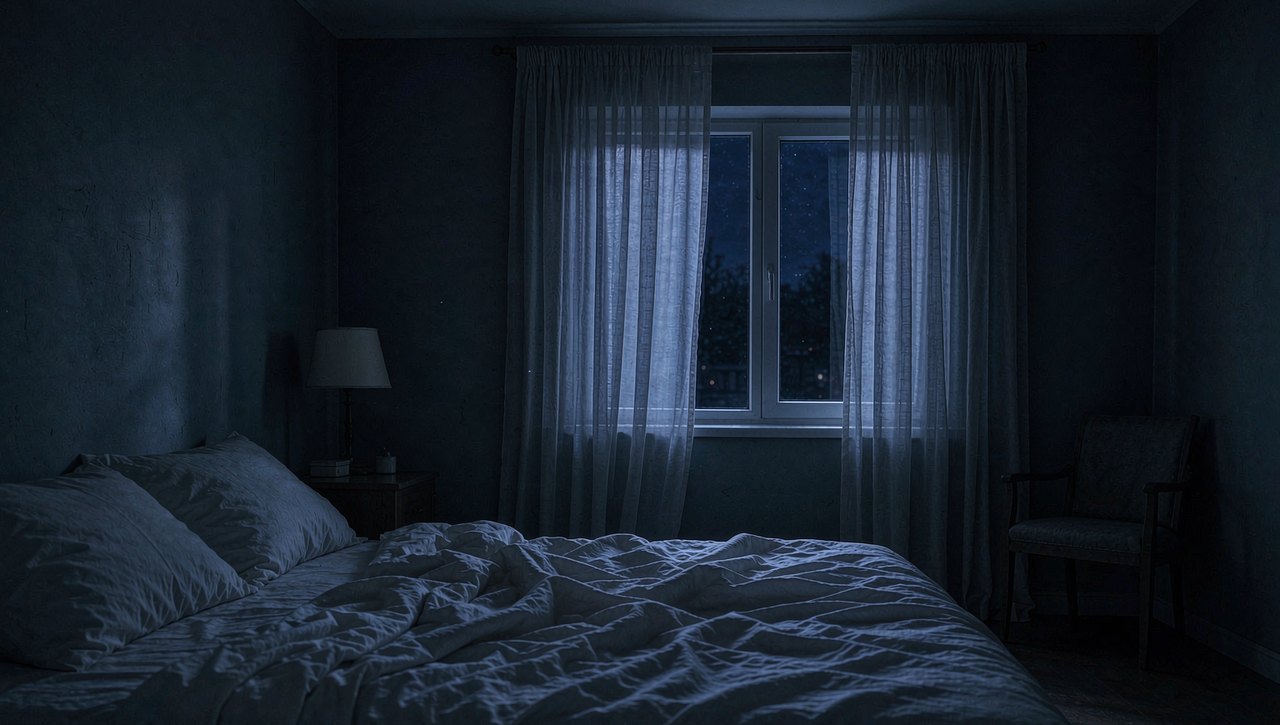
You glance at the clock — 3:14 AM — and the arithmetic begins: if I fall asleep now, I still get four hours. The math makes it worse, not better. Here is the reassuring part first: waking briefly during the night is not a disorder. Sleep runs in cycles of roughly 90 minutes, and you surface partially at the end of each one. Most people drift straight back down and never remember. The trouble starts when a wake-up lasts longer than about fifteen minutes, because then your brain fully comes online, the clock-watching starts, and frustration does the rest. The goal is not to never wake up — it is to make falling back asleep boring again.
First Ten Minutes: Do Almost Nothing
The instinct is to try hard to sleep, and that effort is exactly what keeps you awake. Sleep is not something you can grip tighter. Instead, stay lying down, keep the lights off, and let your body do its thing without commentary. Slow your breathing on purpose: inhale gently through the nose for about four seconds, exhale for about six to eight seconds, and repeat. The long exhale nudges your nervous system out of alert mode — the same reason a sigh feels good. Do not check the time again. Turning the phone face-down or moving the clock out of view removes the single strongest fuel for 3 AM anxiety, which is calculating how much sleep you are losing.
The Twenty-Minute Rule
If you are clearly awake — mind racing, body restless — after roughly twenty minutes, stop trying. Get up, go to another room or a chair, and do something genuinely dull in dim light: leaf through a paper book or magazine, fold laundry, sit and listen to quiet music or a sleep story at low volume. Keep the lights low; bright light at night tells your brain it is morning and pushes your body clock in the wrong direction. Avoid anything on a screen if you can, and absolutely avoid the kitchen-scale snacks and the work email. When your eyelids get heavy — and they will — go back to bed. This sounds counterintuitive, but it protects the association your brain needs: bed means sleep, not bed means lying awake and losing arguments with your own thoughts.
Do Not Negotiate With a 3 AM Brain
Night-time thinking has a peculiar quality: problems feel larger, more urgent, and more certain than they do at breakfast. This is a well-documented effect of sleep-deprived brain chemistry, not a signal that your worries are valid at that hour. If your mind starts generating to-do lists or replaying conversations, use a simple trick: keep a pen and paper by the bed, jot the worry down in a few words, and tell yourself you will deal with it in daylight. Writing it down externalizes it — your brain no longer has to rehearse it on a loop to avoid forgetting. Then return to the slow breathing. Some people find a body-scan works better: mentally move attention from toes to scalp, noting sensation without judging it, and most people lose the plot somewhere around the knees.
What Is Actually Waking You Up
- Alcohol — the classic culprit. A drink helps you fall asleep faster, then rebounds: as it wears off in the second half of the night, sleep becomes shallow and fragmented. If you wake reliably a few hours after going to bed, look at the evening glass of wine first.
- A warm, stuffy room — core body temperature needs to drop slightly for sleep to hold. A bedroom around 18°C, breathable bedding, and a fan make the second half of the night dramatically stickier.
- Late eating and late exercise — digestion and elevated heart rate both compete with deep sleep. Big meals and hard workouts belong earlier in the evening.
- Liquids before bed — a full bladder is an unglamorous but extremely common wake-up trigger, and one wake-up tends to lead to two.
- Light and noise — blackout curtains or an eye mask, and earplugs or white noise, remove the environmental nudges that lift you into light sleep without your noticing.
Fix the Day, Not Just the Night
Night wake-ups respond to daytime behavior more than to anything you do at 3 AM. The biggest lever is a consistent wake-up time — yes, even after a bad night, even on weekends. Sleeping in to "catch up" teaches your body clock to run on a shifting schedule, and shifting schedules produce exactly the fragmented sleep you are trying to avoid. Second: get bright light within an hour of waking, ideally outdoors — morning light anchors the rhythm that keeps sleep consolidated at night. Third: cut caffeine after early afternoon; it lingers far longer than its effect, and its half-life is long enough to lighten sleep many hours later. And fourth: give yourself a real wind-down — the last hour before bed at low light, doing things that bore you slightly, is what lets the first half of the night run deep, and deep early sleep means fewer surfaced wake-ups later.
When to Take It Further
Occasional wake-ups are normal noise. Talk to a doctor if you regularly sleep fewer than six hours, if the wake-ups come with loud snoring, gasping, or a partner's report that you seem to stop breathing (possible sleep apnea), if they coincide with chest discomfort, or if daytime sleepiness starts to affect driving and work. Persistent insomnia — three or more nights a week for months — is very treatable, and the standard treatment is a structured program (CBT-I) rather than sleeping pills, which address the symptom and can complicate the underlying rhythm. None of the home strategies here replace that kind of assessment if your situation is severe or worsening.
You cannot force sleep at 3 AM, but you can make it the path of least resistance: no clock-watching, slow exhales, dull light if you get up, and a morning anchor that keeps the whole rhythm steady.
Most people who fix the alcohol timing, the bedroom temperature, and the clock-watching habit find their night wake-ups shrink back to the brief, forgotten blips they always should have been. If you wake tonight, remember the arithmetic is lying to you: a calm hour of rest in the dark is still restorative, and one bad night does not undo you. The less the wake-up bothers you, the faster it stops bothering you at all.
This article is general health information, not medical advice. It cannot account for your individual circumstances — if you have persistent or severe sleep problems, or a condition that affects sleep, consult a doctor or qualified health professional.
A note on health advice
This guide shares general wellbeing information based on published guidance and personal testing. It is not medical advice. If you have a condition, are pregnant, or feel pain during any movement, check with a qualified professional before starting.