5 Breathing Exercises That Calm Stress in Minutes
Your breath is the one stress lever you carry everywhere. Five simple techniques — when to use each, exactly how to do them, and the mistakes that make breathing exercises backfire.
By the Wellspring Daily editorial team · How we check our guides
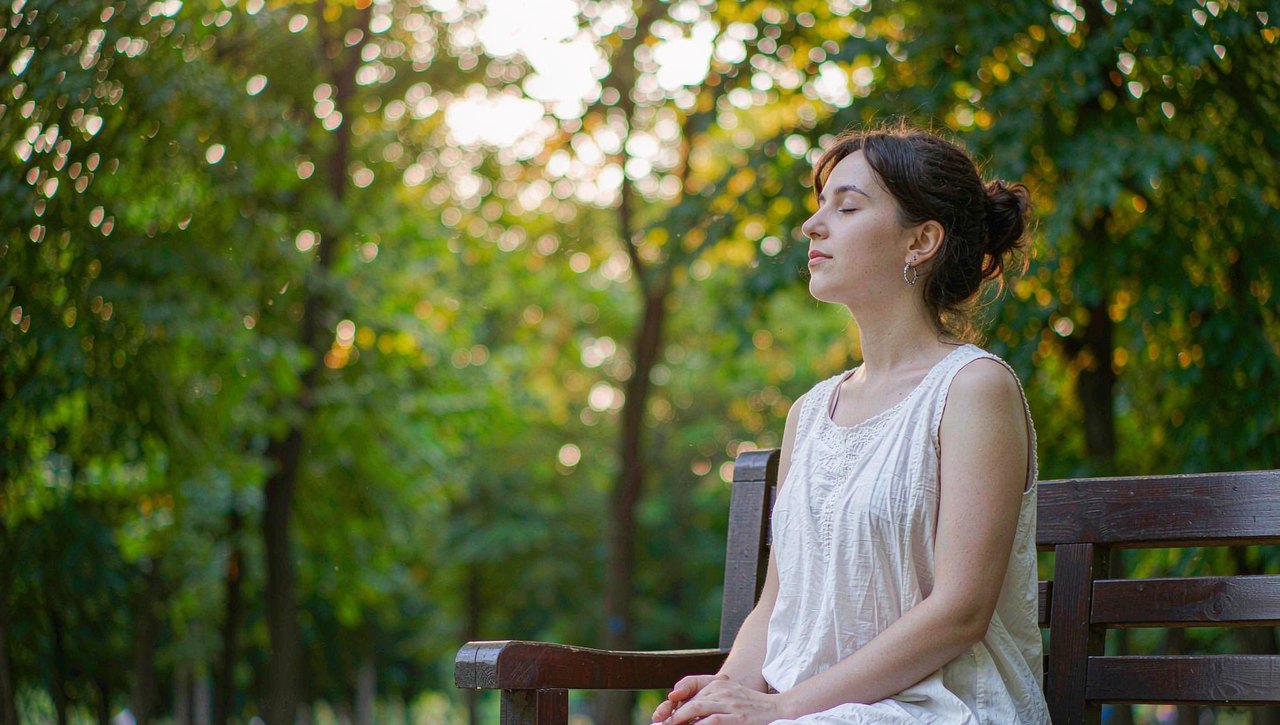
When stress spikes, advice usually arrives in words: calm down, think positive, relax. All of it requires the one thing a stressed brain does not have — cooperation. Breathing is different. It is the only part of your stress response you can steer by hand, and steering it works in the other direction too: change the breath, and heart rate, muscle tension, and that wired, jittery feeling begin to follow. These five techniques are deliberately simple, each takes under five minutes, and each suits a different moment — one for a panic-flavored afternoon, one for before sleep, one for right now as you read this.
1. The Physiological Sigh (For Acute Stress, Works in Seconds)
This is the fastest-acting technique on the list, and the one to use when stress is high right now. Take a deep inhale through the nose, and when your lungs feel full, take a second short "top-up" inhale — that double breath pops open air sacs in the lungs that collapse slightly under stress. Then exhale slowly and completely through the mouth, longer than both inhales combined. One or two sighs are often enough to feel your shoulders drop. This is not a wellness invention: it is the pattern your body already uses spontaneously — the double-inhale-then-sigh you do after crying or waking from a nightmare. Two or three repetitions before a difficult phone call or a presentation is as close to an off-switch as breathing gets.
2. Box Breathing (For Steadiness Before a Known Stressor)
Inhale through the nose for a count of four, hold for four, exhale for four, hold for four, repeat. The even rhythm gives your mind a single simple task, which crowds out spiraling thoughts, and the paced pattern steadies heart rate. Sailors and pilots are taught versions of this for exactly the moment before things get busy. Use it in the car park before the meeting, or during any waiting period that would otherwise turn into rumination. If four feels like a strain, use three — the count matters far less than the evenness. Keep the holds gentle; you should never feel air-hungry. Five minutes is plenty.
3. Extended Exhale Breathing (For Falling Asleep and Slow Wind-Downs)
The exhale is the calming half of the breath cycle — it engages the parasympathetic system, the body's rest-and-digest gear. So make the exhale longer than the inhale: in for a count of four, out for a count of six or eight. Do this lying down, ideally with one hand on your belly so you can feel the breath drop low rather than staying high in the chest. Ten slow rounds typically bring a noticeable slowing; many people lose count and drift off before finishing. This is the technique for the 11 PM mind-race, and it pairs well with the body scan: on each exhale, let one area of your body — feet, calves, hands, jaw — go a little heavier into the mattress.
4. Alternate Nostril Breathing (For Resetting a Scattered Mind)
Sounds exotic, takes thirty seconds to learn. Sitting comfortably, use your right thumb to gently close your right nostril, inhale through the left. Close the left with your ring finger, release the right, and exhale through the right. Inhale right, close it, exhale left. That is one round; do five or ten, slowly and without force. The steady alternation demands just enough attention to interrupt mental static, and practitioners have used it for centuries as a between-modes reset. Use it mid-afternoon when focus has frayed but coffee would be overkill, or before study sessions. Keep the pressure on the nostrils feather-light — you are directing airflow, not plugging a leak.
5. Coherent Breathing (For a Daily Baseline Reset)
This one is not for emergencies; it is maintenance. Breathe at a smooth, even rate of about five to six breaths per minute — roughly in for five and a half, out for five and a half — with no holds, for five to ten minutes once a day. This pace sits at the center of the range where heart rate and breathing naturally synchronize, and practicing it daily appears to improve your overall stress resilience, so the same stressor lands lighter tomorrow. It is boring by design: put on quiet music or do it during the commute (not while driving), and treat it like brushing your teeth for the nervous system.
The Mistakes That Make Breathing Exercises Backfire
- Breathing too big. Forcing huge, deep breaths can cause dizziness and actually increase anxiety. The breaths should be smooth and medium-sized — quiet, even, comfortable.
- Holding to the point of strain. Breath holds are gentle pauses, not endurance tests. If you feel air-hungry, shorten the count.
- Only breathing into the chest. Stress breathing lives high in the chest and shoulders; low, belly-led breathing is the pattern you want to practice while calm so it is available when stressed.
- Trying them for the first time mid-crisis. Practice one technique daily when nothing is wrong, so that under stress the pattern is automatic.
You carry a stress-regulation tool on every walk, in every meeting, and into every sleepless night. The exhale is the lever; the rest is practice.
Pick one technique — the extended exhale is the best all-rounder — and use it once a day for a week before judging results. Breathing practice is cumulative: each session trains the pattern, and the pattern is what shows up for you when the afternoon goes sideways. And if stress feels unmanageable despite tools like these, that is information worth acting on — a doctor or mental health professional can help you look at the bigger picture, which no breathing exercise replaces.
This article is general health information, not medical advice. It cannot account for your individual circumstances — if you experience severe anxiety, panic attacks, or breathing difficulties, consult a doctor or qualified health professional.
A note on health advice
This guide shares general wellbeing information based on published guidance and personal testing. It is not medical advice. If you have a condition, are pregnant, or feel pain during any movement, check with a qualified professional before starting.