Beginner Dumbbell Workout at Home: First Plan
One pair of dumbbells, one mat, twenty minutes. A simple full-body plan for beginners: which moves to do, how to progress week by week, and what to skip.
By the Wellspring Daily editorial team · How we check our guides
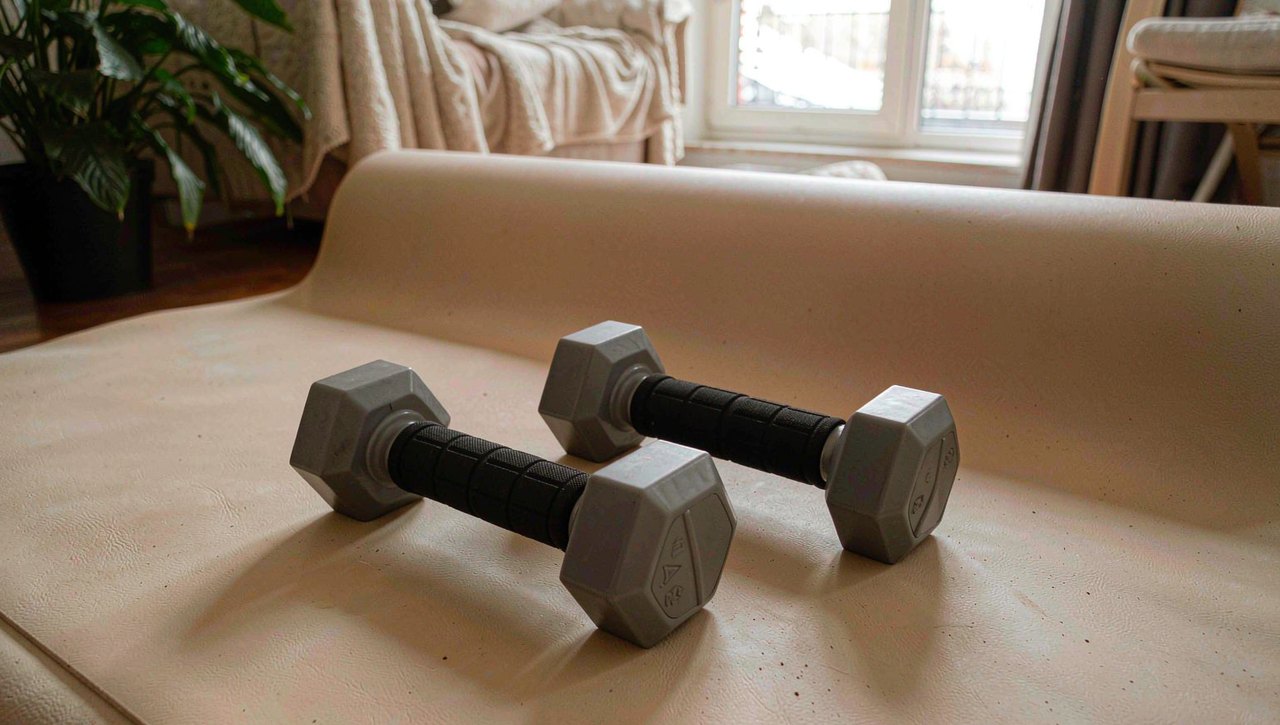
Buying a pair of dumbbells is easy. Knowing what to actually do with them, three times a week, is the part that keeps most beginners from ever getting past week two. This plan is deliberately small: six movements, one pair of weights, about twenty minutes, in the space of a living-room rug. It covers the whole body, it leaves room to grow, and it does not require you to learn anything that looks like a circus trick. If you are returning from a long break or managing a health condition, it is worth a quick conversation with a doctor first — then start lighter than you think you need to.
What to Buy (or Borrow)
For most beginners, one pair of dumbbells in the 5–10 kg (11–22 lb) range covers months of training — women often start comfortably around 4–6 kg per hand, men around 8–10 kg, but the honest test is the plan below: pick a weight where the last two reps of a set feel challenging but your form does not fall apart. Adjustable dumbbells solve the "outgrow them" problem in one purchase if space and budget allow. Hexagonal heads sit flat and do not roll, which matters more than any brand name. A cheap yoga mat saves your knees during floor work, and that is the entire equipment list.
The Six Moves
Each one trains a basic human movement — push, pull, squat, hinge, carry — which is why this handful covers the whole body without a rack of machines.
- Goblet squat — hold one dumbbell vertically against your chest, feet about shoulder width, and sit down between your hips until your thighs are roughly parallel to the floor, then stand. The weight in front keeps your torso upright and teaches the squat pattern gently. 8–12 reps.
- Floor press — lie on your back, knees bent, a dumbbell in each hand, and press them up until your arms are straight over the chest, then lower with control until your upper arms rest on the floor. The floor replaces the bench and automatically protects your shoulders. 8–12 reps.
- One-arm row — hinge forward, brace one hand on a chair or the couch arm, and pull the other dumbbell up toward your hip, elbow tracing close to your body. This is the pull that balances all the pushing in daily life. 8–12 reps per side.
- Romanian deadlift — hold both dumbbells in front of your thighs, soft knees, and push your hips back, sliding the weights down your legs until you feel a stretch along the hamstrings, then stand by driving the hips forward. The hinge pattern is the one beginners rush; the move ends when your hamstrings say so, not when the weights touch the floor. 8–10 reps.
- Shoulder press — seated or standing, press both dumbbells from shoulder height to overhead and lower under control. If your back arches, sit down and do it seated. 8–12 reps.
- Farmer carry — simply pick the dumbbells up and walk briskly around the room or hallway for 30–40 seconds, shoulders back, gripping hard. It trains the grip and the trunk more honestly than most crunch variations. 2–3 laps.
The Plan Itself
Run the six moves as a circuit, twice through, resting 60–90 seconds between exercises in the first weeks:
- Goblet squat
- Floor press
- One-arm row (both sides)
- Romanian deadlift
- Shoulder press
- Farmer carry
Do this three days a week with at least one rest day between sessions — Monday, Wednesday, Friday fits most schedules. Spend the first two weeks deliberately light, treating the sessions as rehearsals: the goal is to learn the movements, not to test them. A five-minute warm-up first makes everything above feel better and safer; our guide to warming up before a workout takes five minutes and needs no equipment.
How to Progress Without Hurting Yourself
Progress is boring on purpose. When you can complete all sets of an exercise with two good reps still in the tank, add one repetition per set the following week. When you reach the top of the rep range comfortably — twelve for most moves — increase the weight a step and drop back to eight reps. That two-week rhythm of small steps is precisely how beginners avoid the two classic traps: adding weight so fast that form collapses, and adding nothing for months so that the workouts stop doing anything. Track it on paper or in your phone; the note from last week is the only coach you need.
The Three Mistakes Worth Naming
- Going too heavy too soon. Ego picks the weight; joints pay the invoice. If you cannot keep the last rep as clean as the first, the weight is a conversation for next month.
- Skipping the pull. Beginners love pressing exercises and quietly neglect rows. The one-arm row is not optional — it is what keeps your shoulders happy through all that pressing and all that desk work.
- Training hard but sleeping badly. Muscle is built between sessions, not during them. Our guide to rest days and recovery explains why the day off is part of the plan, not a failure of discipline.
Six movements, twice through, three days a week. Simple enough to survive a busy month — and consistent small loads beat heroic sporadic ones every single time.
Bodyweight training, like the routines in our home bodyweight workout guide, pairs well with this plan on alternate days if you enjoy variety, and once the dumbbells start feeling light you can mix both styles freely. Keep the sessions short, keep the notes honest, and let the calendar do the heavy lifting. General fitness information like this is not a substitute for personal medical advice — if something hurts in a sharp or one-sided way, stop and get it looked at. For more beginner-friendly fitness and nutrition guides, browse the blog index, and you will find the equipment-free basics on our tools page too.
A Note on Health Information
This article provides general fitness information for healthy adults and is not medical advice. Individual needs, injuries, and health conditions vary, so consult a qualified health professional before starting a new exercise program, especially if you have existing pain, are pregnant, or manage a chronic condition.
A note on health advice
This guide shares general wellbeing information based on published guidance and personal testing. It is not medical advice. If you have a condition, are pregnant, or feel pain during any movement, check with a qualified professional before starting.