Portion Control Without Counting Calories
Three simple methods - your hand, your plate, and your dishes - to bring portions back to normal without weighing food or logging every meal.
By the Wellspring Daily editorial team · How we check our guides
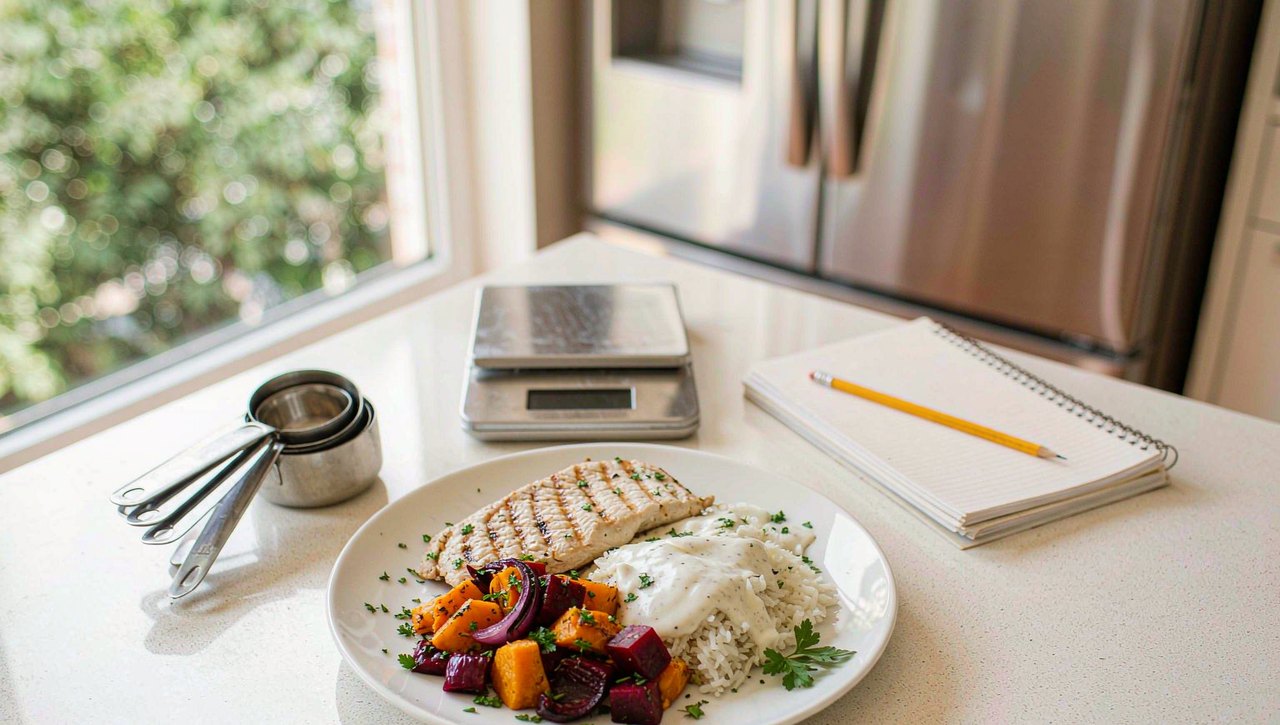
Most people who struggle with portions do not need a spreadsheet. They need a way to decide how much to put on the plate that works on a busy Tuesday, in a restaurant, and at a family dinner where someone else cooked. Calorie counting fails for most people not because the math is hard but because the logging is exhausting - the moment life gets busy, tracking stops and old portions return. This guide covers three methods that need no app, no scale, and no math at the table.
Why portions drifted in the first place
Portions grew quietly over decades. The average dinner plate sold today is around 11 to 12 inches across; in the 1960s it was closer to 9 inches. That sounds trivial until you do the area math: a 12-inch plate holds roughly 44 percent more food than a 9-inch plate, because area grows with the square of the diameter. The same familiar meal quietly became hundreds of calories larger, and nobody felt a thing, because a full plate looks like a normal amount to eat.
Restaurant servings moved further still. A reference serving of cooked pasta is one cup - about 200 calories. A typical restaurant spaghetti portion is three to four cups. Your eyes were calibrated against smaller portions than the ones now in front of you, so "eat until the plate is clear" no longer means what it used to.
Method 1: the hand system
Your hand is a portion guide that travels everywhere and scales with your body - a bigger person has bigger hands and needs bigger portions. The four reference measures take two minutes to learn:
- Protein: one palm. The meat, fish, tofu, or yogurt portion is about the size and thickness of your palm, minus fingers - roughly 3 to 4 ounces, or 85 to 115 grams. That is 20 to 30 grams of protein for most meats.
- Vegetables: one fist. A fist is about one cup. Aim for one to two fists at lunch and dinner. Vegetables are the one category where "can I have more" is almost always yes.
- Starches: one cupped hand. Rice, pasta, potatoes, and bread get about one cupped handful. This is the category where restaurant plates run three to four times past the mark, so it is worth checking once with a real measuring cup at home.
- Fats: one thumb. Butter, oil, nut butter, and dressings get about a thumb, close to a tablespoon. A tablespoon of olive oil is about 120 calories; the free pour from a bottle is commonly two to three tablespoons, which is how a healthy salad quietly becomes a 400-calorie salad.
For a full meal, the template is one palm of protein, one to two fists of vegetables, one cupped hand of starch, and one thumb of fat. Very active people often need roughly double the protein and starch portions - the system flexes by adding hands, not by abandoning it.
Method 2: the plate method
The plate method needs no measuring at all. On a 9-inch plate: fill half with vegetables, one quarter with protein, one quarter with starches, and add fat through cooking or a thumb-sized dressing portion. Plate size is part of the method - if you do this on a 12-inch plate you have simply built a bigger meal. If your dinner plates run large, serve meals on salad plates for a week and see how it feels.
Two details make this work in real kitchens. First, put the serving dishes on the counter and the plates on the table - a full serving bowl within arm's reach produces second helpings nobody actually wanted, while walking to the counter is the built-in pause. Second, for mixed dishes like stews and stir-fries, the layout still applies: fill half the plate with the most vegetable-forward item on the table and treat the rest as the two quarters.
Method 3: change the dishes, not the discipline
Switching from a 12-inch to a 10-inch dinner plate cuts the surface area by about 30 percent, which means a normally full plate carries about 30 percent less food - pure geometry, no willpower involved. Tall narrow glasses beat short wide ones for the same reason: people pour noticeably less into a tall glass than they splash into a short wide one.
The same logic covers the snack drawer. Food eaten straight from a package has no visible endpoint. Take the portion out - a small bowl of chips, a palm-counted handful of nuts - close the package, and put it back before you sit down. A cup of granola can run 450 to 500 calories while the serving on the label is two-thirds of a cup; pouring cereal straight from the box is the classic case where everyone overspills.
What a real serving looks like for common foods
Portion confusion is worst for foods where the label serving is much smaller than what people actually eat. These references are worth knowing cold:
- Cooked rice or pasta: one serving is one cup, about 200 calories. The mound on a restaurant plate is usually three to four cups.
- Nuts: one serving is one ounce - about 23 almonds - roughly 165 calories. A bowl eaten during a show can hold four servings without looking like much.
- Peanut butter: two level tablespoons, about 190 calories. A heaping spoonful is easily double that.
- Cheese: about 1.5 ounces - roughly 150 to 170 calories.
- Meat: one palm, 3 to 4 ounces cooked. Supermarket steaks are often 8 to 12 ounces, so one steak is two to three reference servings.
- Breakfast cereal: the label serving is usually three-quarters to one cup. The average freehand bowl is two cups or more.
You do not need to memorize the list. Measure each of these once, deliberately, at home - five minutes with a measuring cup recalibrates your eye for months.
Calorie density: why equal volumes are not equal calories
Two foods can occupy identical plate space with wildly different calorie loads. One hundred grams of grapes is about 70 calories; one hundred grams of raisins is about 300. The difference is water - remove it and the same volume concentrates its calories more than fourfold. This single concept explains most portion surprises: oil, cheese, nuts, dried fruit, and granola are compressed versions of foods that were once bulky.
The practical move is not banning dense foods - it is pairing them with volume. Half the granola, all the yogurt and berries; a smaller pour of dressing on a bigger salad; half the cheese, double the vegetables. You keep the flavor, the part of the meal that fills your stomach grows, and the calorie total lands somewhere sensible without any counting.
Eating out without doing math at the table
Restaurant portions are built for value perception and will not shrink because you asked. Three tactics cover most situations. First, the box-first move: when the plate is obviously two meals, box half before the first bite - deciding at the end, once the food is in front of you and tasty, rarely happens. Second, order the appetizer portion of heavy dishes; many kitchens plate a genuinely normal-sized protein that way. Third, apply the plate method in reverse: find the palm of protein, eat the protein and vegetables fully, and treat half the starch as your cupped-hand portion.
Takeout works the same way with one extra step: plate it. Decant a plate-sized portion, put the containers in the fridge, and the meal has an ending again - the same endpoint that makes tracking work for the few who sustain it, minus the bookkeeping.
A one-week audit instead of a permanent log
If you want data without a permanent habit, photograph every plate before you eat for seven days - thirty seconds per meal, no numbers recorded. At the end of the week, check the photos against two questions: does each plate roughly match the half-vegetable, quarter-protein, quarter-starch layout, and are any foods running at three or more times the reference serving?
Most people find two or three repeat offenders - usually oil pours, starch mounds, and snack-bag sessions - rather than a general pattern of overeating. Fix exactly those with the methods above and stop there. The audit repeats quarterly, not daily.
When portions are not the real problem
Portion control is one lever among several, and it stalls in recognizable situations. If you finish meals and feel hungry again within ninety minutes, the issue is usually composition, not quantity - meals short on protein or fiber do not hold you, and shrinking them further just moves the snacking earlier. Check that each meal carries a palm of protein before shrinking anything else; the daily protein guide covers how much to target. Chronic short sleep inflates evening snacking through appetite hormones, and no portion method survives a 5-hour sleep schedule. Liquid calories - sodas, sweetened coffee drinks at 250 to 400 calories for 16 ounces, juice - bypass fullness signals almost entirely; shrink those to zero before touching food portions.
Common mistakes that undo the methods
- Drinking your portions. A 12-ounce regular soda is about 140 calories with 39 grams of sugar and does nothing for fullness.
- Health-halo foods. Olive oil, nuts, avocado, and granola are nutritious and dense. Healthy does not mean portion-free.
- Skip-then-binge patterns. Skipping lunch reliably produces a dinner portion twice the size plus snacks. Regular meals make portion control at dinner nearly automatic.
- Changing everything at once. Pick the plate method or the hand system, run it for two weeks, then add the dish swaps.
The bottom line
Portion control without counting comes down to three defaults that make better amounts automatic: a hand system that sizes protein, starch, and fat wherever you eat; a plate layout that fills half your plate with the category that barely matters calorically; and dishes and packaging arranged so a normal portion is the path of least resistance. Measure your own hand and your usual foods once, box half the restaurant plate before the first bite, and run a photo audit once a season. None of it requires an app, and all of it survives a busy week - which is exactly what the spreadsheet methods never could.
More practical guides are in the Wellspring Daily blog index, including meal prep for beginners if cooking ahead is the piece your week is missing, and snack ideas for steady energy if the 3 p.m. drawer raid is your repeat offender.
This article is general health information, not medical advice. Individual energy and portion needs vary with age, body size, activity, and health conditions. If you have a medical condition, a history of disordered eating, or take medications affected by diet changes, consult a qualified healthcare professional or registered dietitian before changing how you eat.
A note on health advice
This guide shares general wellbeing information based on published guidance and personal testing. It is not medical advice. If you have a condition, are pregnant, or feel pain during any movement, check with a qualified professional before starting.