Meal Prep for Beginners: a Week of Healthy Lunches in Two Hours
Batch cooking fails when it is overly ambitious. This beginner meal-prep plan uses one oven tray, one pot and a repeating formula — protein, two vegetables, a grain, a sauce — to fill five lunches without taking over your Sunday.
By the Wellspring Daily editorial team · How we check our guides
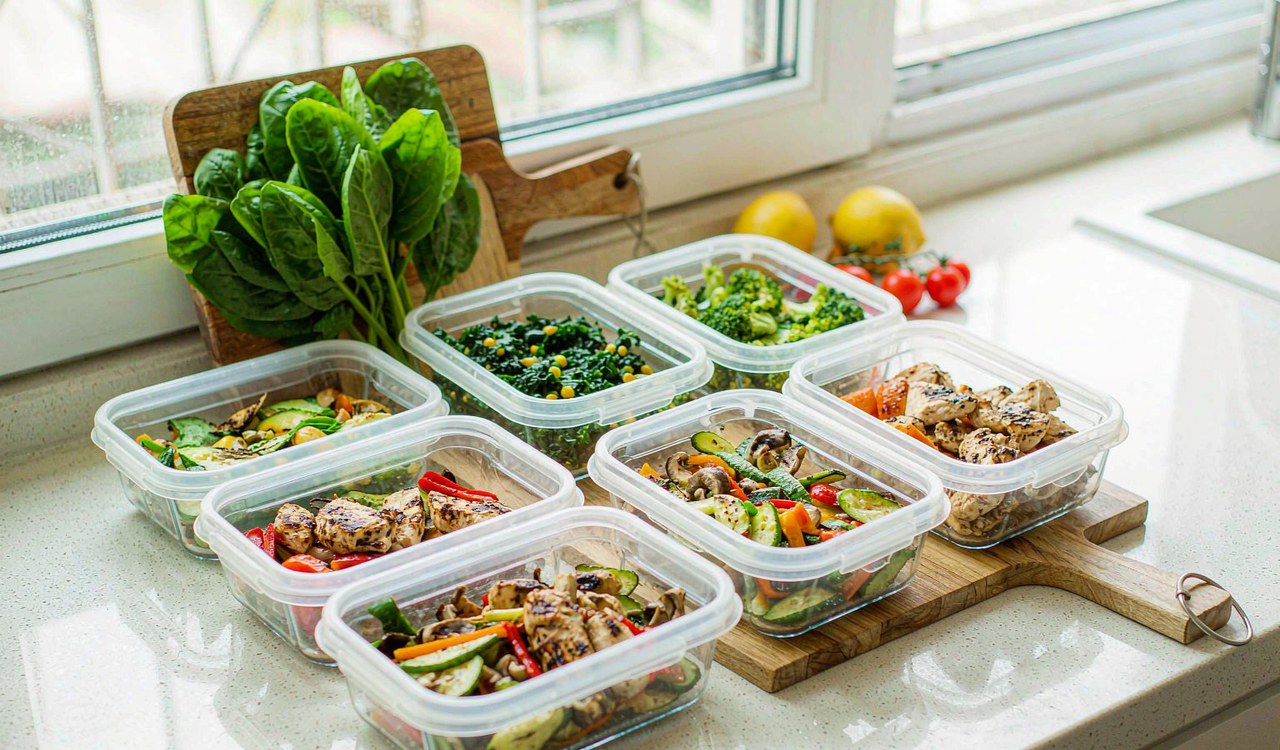
Most first attempts at meal prep die the same way: an inspired Sunday session that produces nine identical boxes of dry chicken and steamed broccoli, eaten with growing resentment until Wednesday, after which the remaining containers migrate to the back of the fridge and the takeaway app reclaims its throne.
The fix is not more discipline. It is a smaller system. This guide walks through a beginner-proof version: five lunches, two hours, one oven tray and one pot, built on a repeating formula that survives contact with real weeks.
The formula that replaces recipes
Every container is built from four parts, in this ratio:
- A protein (about a quarter of the box): chicken thighs, salmon fillets, lean mince, tofu, eggs, chickpeas, lentils.
- Two vegetables (about half the box, combined): anything that roasts well plus anything that eats raw or wilts quickly.
- A grain or starchy base (about a quarter): rice, quinoa, bulgur, potatoes, wholegrain pasta.
- One sauce or acidic finish: this is the part beginners skip and it is why their food tastes like cardboard by Tuesday. Yoghurt-and-herb, tahini-lemon, salsa, a peanut-lime dressing, or simply olive oil, lemon juice and salt added just before eating.
Cook two or three proteins and three or four vegetables across the week and the same components recombine into meals that never feel identical. That variety — not novelty cooking — is what makes the habit stick, for the same reason small repeatable actions beat grand plans in the health-habits guide.
The two-hour plan, step by step
Do this once and it will take three hours while you find your pans. By the third week it will take ninety minutes.
- Minute 0-15: pick and shop. Choose from this week: two proteins, four vegetables, one grain, one sauce. Write the list before you shop — improvised grocery trips are where meal prep budgets go to die. A workable starter basket: chicken thighs, a tin of chickpeas, broccoli, bell peppers, red onion, courgette, cherry tomatoes, spinach, brown rice, lemons, yoghurt.
- Minute 15-35: oven on, tray one. Heat the oven to about 220°C / 425°F. Cut the firm vegetables (broccoli, peppers, onion, courgette) into rough chunks, toss with oil, salt and pepper, spread on a tray — crowded trays steam instead of roasting, so use two trays if needed. Roast 25-30 minutes, stirring once.
- Minute 20-45: pot on. Start the grain (rice does 25-35 minutes mostly unattended) and simmer the eggs or lentils if using. One pot, timer set, walk away.
- Minute 35-60: cook the proteins. Season the chicken and roast it on its own tray for the last 20 minutes of the vegetable cook, or pan-fry fish and tofu fast while the oven works. If one protein is tinned or pre-cooked (chickpeas, rotisserie chicken), it costs you zero minutes — use it.
- Minute 60-75: make one sauce. Blend or whisk yoghurt with garlic, lemon, salt and a handful of herbs; or shake oil, lemon, mustard and honey in a jar. One good sauce lasts the week and rescues every combination.
- Minute 75-100: assemble. Line up five containers. Grain base first (a flat layer), then vegetables, then protein. Leave the sauce off — it goes on fresh at lunchtime. Cool everything uncovered for 20-30 minutes before lids go on; sealing hot food creates condensation and soggy vegetables.
- Minute 100-110: label and fridge. Days one to three in the fridge; the rest in the freezer, moved down the night before. Spinach and other delicate greens are added cold at lunchtime rather than cooked into the box.
Food safety, briefly but seriously
Cooked food is happiest in the fridge for about three to four days; after that, freeze it rather than gamble. Wash hands and boards between raw meat and ready-to-eat vegetables, cool food quickly, and reheat lunch thoroughly until piping hot. These are the boring rules that make the whole system safe to repeat every week.
Three ways beginners overcomplicate it
Seven days instead of five. Prep the lunches that hurt the most — usually workdays. Weekend meals are when people actually enjoy cooking; leave them alone.
New recipes every week. Repeat the formula and rotate one new component per week. You are building a default, not a cooking show.
Skipping the eating experience. Plate your lunch away from the desk when you can, and drink water with it — most people running on coffee are mildly dehydrated by lunch, which the daily-water guide covers properly. Food you eat resentfully in ten minutes while reading email does not feel like care, even when it is nutritionally perfect.
The minimal kit (about one drawer's worth)
You need: five or six containers with working lids (the glass, compartment-style ones are worth the small premium — they reheat without smelling of last week), one large oven tray and one pot you already own, a jar with a lid for shake-together dressings, and a marker or masking tape for dates. That is genuinely the whole list. A rice cooker or an instant-read thermometer are conveniences, not requirements, and nothing in this system requires a single-purpose gadget.
A week of example boxes from one prep session
To make the formula concrete, here is what the starter basket above produces for a five-day week:
- Monday: rice, roasted broccoli and peppers, chicken thighs, yoghurt-herb sauce.
- Tuesday: rice, roasted courgette and onion, chickpeas (tossed in the same spices as the chicken), lemon dressing over the top.
- Wednesday: rice, spinach and cherry tomatoes added cold, chicken, tahini-lemon sauce.
- Thursday: rice, leftover roasted vegetables reheated, chickpeas plus a soft-boiled egg from the pot batch.
- Friday: anything remaining over a handful of greens, whatever sauce is left, generous black pepper.
Same five ingredients, five noticeably different lunches. Rotate the starting template weekly — swap rice for potatoes or bulgur, chicken for salmon or tofu, the sauce for salsa — and the system runs for months without feeling like a rut, which is precisely the point.
Money notes
Batch cooking is usually sold as a health habit, but the economics are half the case. Cooking from whole ingredients runs meaningfully cheaper per meal than the workday-lunch alternative in most places; protein bought in larger packs and frozen in meal-sized portions stretches further; and the biggest single saving is the one nobody mentions — every lunch you have already cooked is a lunch you did not impulse-buy at 12:40pm. Buy vegetables that are in season, use frozen vegetables without apology (they are picked ripe and frequently cheaper), and let tinned beans and lentils carry protein duty one or two days a week. A starter week realistically costs less than two takeaway lunches.
When the week goes sideways
Every meal-prepper has the week where the plan meets reality. Three rescues that keep the habit alive: first, freeze half the batch on prep day whenever you can see a chaotic week coming — frozen Thursday and Friday boxes are a gift to future you. Second, keep a shelf of zero-effort components (tinned fish, pre-washed salad, eggs, good bread) that can fill any failed gap without a takeaway. Third, if you only manage one hour instead of two, prep three boxes instead of five and cook the rest fresh; a 60 percent plan executed beats a 100 percent plan abandoned. The system is meant to bend, and the difference between people who keep the habit and people who lose it is almost never willpower — it is whether the plan was built to survive a bad week in the first place.
What this can and cannot do
Batch cooking makes it dramatically easier to eat regular, balanced meals — more vegetables, fewer emergency pastries, less decision fatigue. That is a genuine health lever for most people. It is not a weight-loss prescription and not a medical plan: anyone managing a condition such as diabetes, kidney disease, coeliac disease, or pregnancy-specific nutrition needs should adapt portions and ingredients with professional guidance rather than from a general template.
This article offers general information about food and habit-building, not personalised medical or dietary advice. For individual nutrition needs — including allergies, chronic conditions, or therapeutic diets — consult a registered dietitian or your doctor.
A note on health advice
This guide shares general wellbeing information based on published guidance and personal testing. It is not medical advice. If you have a condition, are pregnant, or feel pain during any movement, check with a qualified professional before starting.