Gentle Stretches for Lower Back Stiffness: A Daily Routine
Lower back stiffness usually wants movement, not rest. A gentle ten-minute daily routine, how to do each stretch safely, and the warning signs that mean you should talk to a professional instead.
By the Wellspring Daily editorial team · How we check our guides
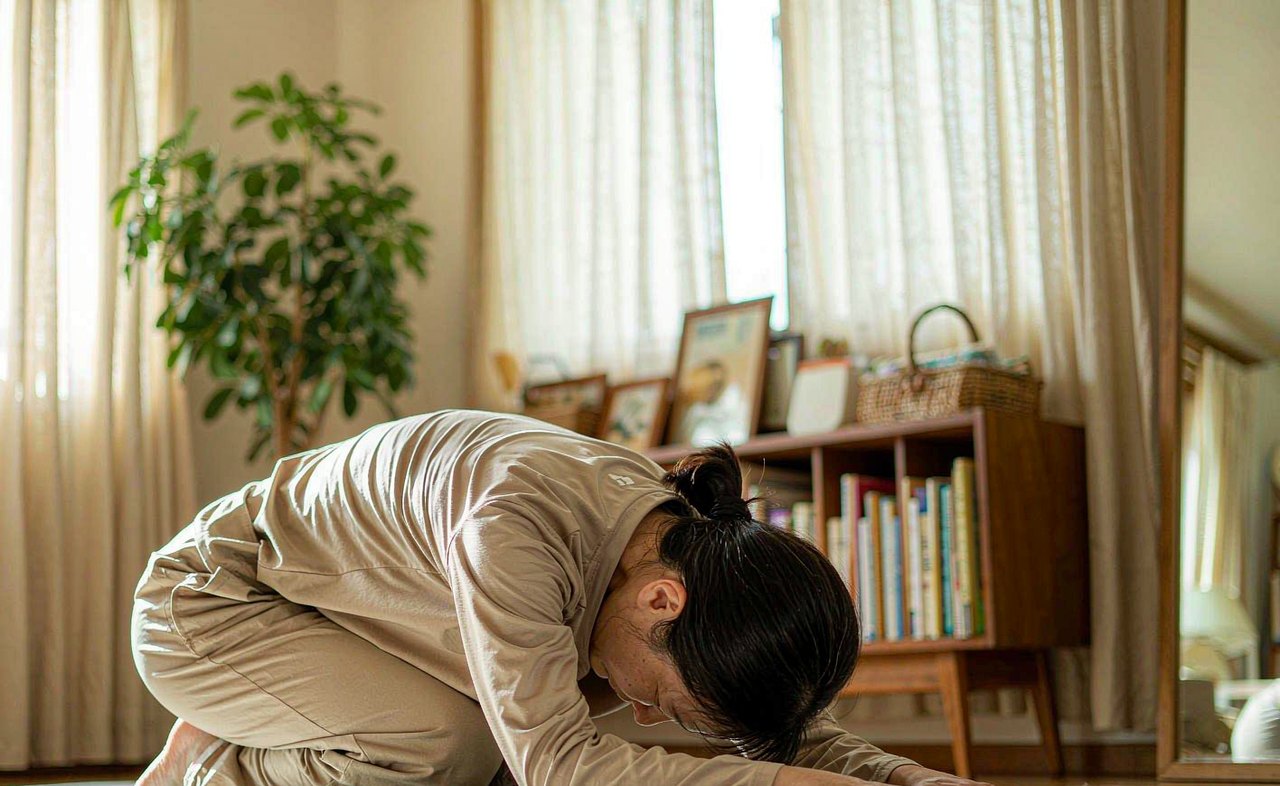
If your lower back feels stiff when you stand up from a chair, or takes a few stiff minutes to loosen every morning, you are in very common company. Long hours of sitting, short hours of movement, and the general wear of daily life leave most adult backs wanting exactly one thing: regular, gentle movement. Not rest, not heroic flexibility attempts — just movement, done often.
This guide gives you a ten-minute daily routine of gentle stretches for a stiff lower back, explains how to do each one safely, and covers the part that matters more than any single stretch: how to tell ordinary stiffness from the kind of discomfort that should be checked by a professional.
A minute of safety first
Everything in this routine should feel like mild, comfortable tension — around a three or four out of ten. Stretching should never push into sharp pain, and pain that shoots, burns or radiates is a stop signal, not a stretch to breathe through.
Some situations are not stretching problems at all. Speak to a doctor or physiotherapist promptly if any of these apply: pain that travels down the leg below the knee, numbness or tingling in a leg or foot, weakness in a leg, pain that started after a fall or accident, pain that regularly wakes you at night, or back pain accompanied by fever or feeling generally unwell. The same goes if you are managing a diagnosed spinal condition, recovering from surgery, or are pregnant — ask a professional what is appropriate for you before starting. This routine is general information, and it cannot account for your individual situation.
How to use the routine
Set aside about ten minutes, once a day or most days. A mat or a patch of carpet is enough. Breathe slowly throughout, and exhale as you ease into each position — a held breath fights the very muscles you are trying to persuade to let go. Many people find the routine most useful either first thing, when overnight stiffness is at its peak, or in the evening after a long day at a desk. The time of day matters far less than the regularity.
The routine: seven gentle moves
1. Knee to chest
Lie on your back with knees bent. Bring one knee up toward your chest and hold it gently with both hands for about thirty seconds, then switch legs. Finish by hugging both knees in for another thirty seconds, letting your lower back soften toward the floor. This is the gentlest opener in the set and a good place to find out what today's stiffness level feels like.
2. Cat–cow
Come onto hands and knees. As you exhale, round your spine toward the ceiling and let your head drop; as you inhale, let your belly soften and your chest lift slightly. Move slowly — eight to ten cycles, letting the breath set the rhythm. This alternately flexes and extends the whole spine, which is precisely what sitting all day never does.
3. Pelvic tilt
Still on your back with knees bent, flatten your lower back gently toward the floor by tilting your pelvis — your tailbone lifts a centimetre, nothing dramatic. Hold three seconds, release, repeat ten times. It looks almost too small to matter, but it re-teaches the deep muscles around your trunk to work gently instead of gripping or switching off.
4. Child's pose
From hands and knees, sit your hips back toward your heels and let your arms rest forward, forehead down if comfortable. Hold for thirty to sixty seconds, breathing into your back — you should feel it widen slightly with each breath. If your knees complain, place a cushion between your thighs and calves or keep the pose higher. Shifting both hands over to one side turns it into a gentle stretch for each flank in turn.
5. Figure-four glute stretch
Lying on your back, cross one ankle over the opposite knee, then either reach through and draw the supporting thigh toward you, or leave the foot on the floor and gently press the crossed knee away. Thirty seconds per side. The large muscles of the buttocks sit right in the lower back's neighbourhood, and tightness here commonly travels; this stretch often brings relief that back-focused stretching alone does not.
6. Kneeling hip flexor stretch
Kneel on one knee with the other foot forward in a lunge position, and tuck your tailbone slightly as you shift your weight forward until you feel a stretch across the front of the hip of the kneeling leg. Thirty seconds per side, hands on the front thigh for balance. Hours of sitting hold these muscles short, and short hip flexors tug on the pelvis and the lower back attached to it.
7. Standing back extension
Stand with feet hip-width apart, place your hands on your lower back or the back of a chair for support, and gently arch backward, looking slightly up. Five to eight slow, easy repetitions. This is the exact opposite of the forward-bent position your back held all day, and it is the one move worth repeating in miniature during work hours too.
Rules that make stretching actually work
First: no bouncing. A long, still hold is what persuades a muscle to release; bouncing just triggers a protective contraction. Second: stay honest about intensity — a stretch you can breathe through is doing more good than an aggressive one you endure. Third: frequency beats force. Ten easy minutes daily outperforms an ambitious half-hour once a week, and improvements typically build over two to three weeks rather than appearing after one session.
Break up the sitting that caused this
If the routine is the remedy, the sitting is the cause, and no morning routine can outrun ten uninterrupted desk hours. Stand up, walk a few steps, or do two or three standing back extensions every thirty to sixty minutes — a recurring reminder on your phone works until it becomes automatic. Our guide to stretches for desk workers fits neatly into those small breaks, and the setup advice in improving your posture reduces the load your back carries between them.
Stretching is half the story
Loosening a stiff back feels good, but a back also needs strength to stay comfortable. Movements like bird dogs, dead bugs and glute bridges — covered in our guide to beginner core exercises — build the endurance that keeps your trunk supported through long days, and a simple plan like our home bodyweight workout covers the rest of you. Ordinary walking, unsurprisingly, is one of the best things a stiff back can get; the plan in starting a walking habit needs no equipment at all. And if mornings are your stiffest hours, the sequence in our morning stretch routine pairs well with this one.
When to get help instead of stretching harder
Give the routine two to three weeks of genuine consistency. If the stiffness eases even slightly each week, you are on the right track. If nothing changes, if symptoms worsen, or if any of the warning signs from the safety section appear, stop stretching into it and get a professional assessment instead. Backs generally respond well to the right kind of movement — but the right kind is specific to the person, and that is a question for a qualified clinician, not an article.
This article is general health information, not medical advice. It cannot account for your individual circumstances — when in doubt, consult a qualified healthcare professional or physiotherapist before starting any new exercise routine, especially if you have existing back problems or pain.
A note on health advice
This guide shares general wellbeing information based on published guidance and personal testing. It is not medical advice. If you have a condition, are pregnant, or feel pain during any movement, check with a qualified professional before starting.