The Food Order Trick That Smooths Afternoon Crashes
Why eating vegetables and protein before starch flattens the post-meal glucose spike, how to apply the sequence to real meals, and what results to expect.
By the Wellspring Daily editorial team · How we check our guides
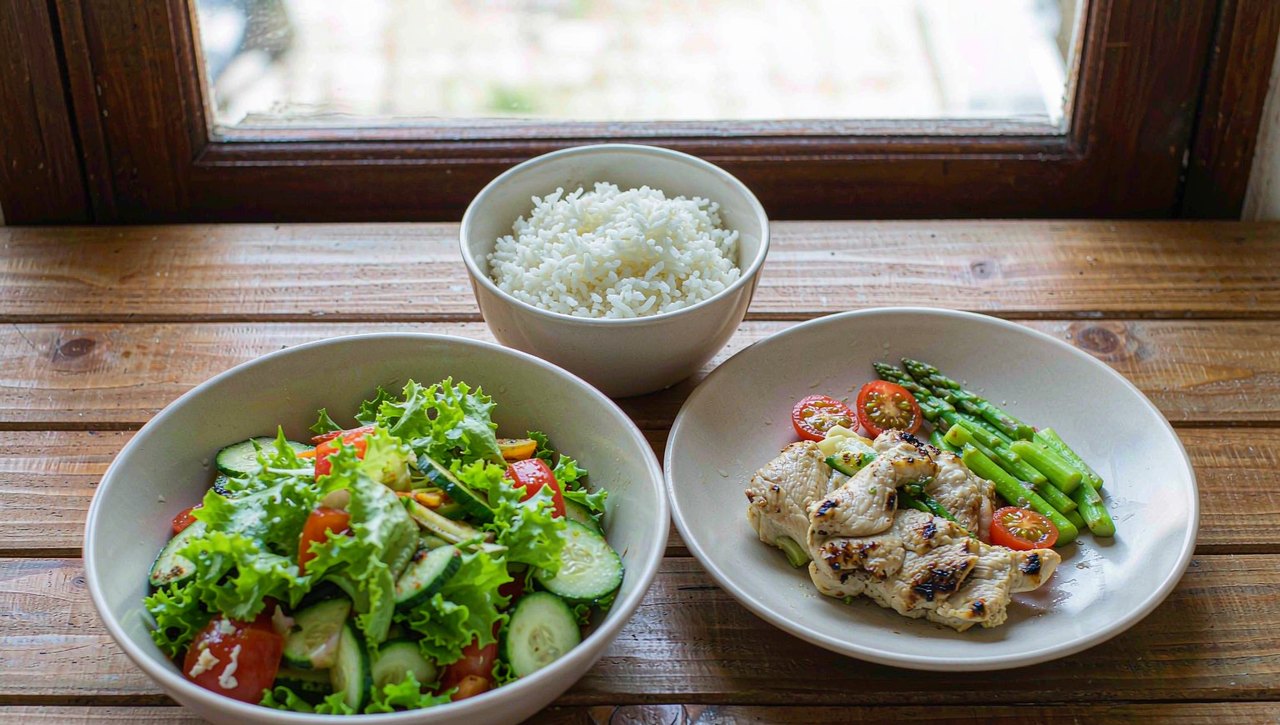
The 3 p.m. crash is easy to blame on a bad night of sleep or a slow meeting, but for a lot of people the main trigger is sitting on their plate an hour earlier. Not the total amount of food - the sequence. A sandwich-first, greens-never lunch sends blood sugar up faster than the same lunch eaten in a different order, and the fast rise is what sets up the dip you feel as brain fog, yawning, and a vending-machine craving two hours later.
This guide explains the mechanism in plain terms, what food-ordering trials have actually measured, and how to apply the idea to breakfast, lunch, and dinner without weighing food or counting anything.
What actually causes the afternoon crash
Every meal that contains carbohydrates raises your blood glucose. That is normal and healthy. The problem is the shape of the rise. When a large dose of fast-absorbing carbohydrate - white bread, white rice, sugary drinks, most breakfast cereals - hits an empty stomach, glucose climbs steeply, the pancreas responds with a large insulin release, and in many people the response overshoots. Glucose then falls not just back to baseline but below it for a while. That below-baseline dip, sometimes called reactive hypoglycemia in its stronger forms, is what people typically report as a crash: tiredness, difficulty concentrating, irritability, and hunger returning well before the next meal.
Two things make the swing worse. First, eating carbohydrate alone, with nothing to slow its exit from the stomach. Second, the largest carbohydrate dose of the day landing at midday, right when the body's own glucose tolerance is comparatively weaker than in the morning. The crash is not a willpower problem; it is a sequence and composition problem.
The food order principle: vegetables and protein first, starch last
The idea is simple: eat the components of your meal in a specific order - fiber-rich vegetables and protein first, then fat-containing foods, and save the dense starch or sugar for the end. You change nothing about what is on the plate and nothing about how much. Only the order changes.
The reason it works is mechanical, not magical. Protein, fat, and fiber all slow gastric emptying - the rate at which food leaves the stomach. When starch arrives in the intestine while the earlier food is still being processed, its glucose is absorbed against that resistance, so the same amount of carbohydrate produces a lower, slower peak instead of a sharp spike.
This is not fringe advice. It has been tested directly. A well-known crossover trial in people with type 2 diabetes (published in Diabetes Care in 2015) had participants eat the same meal two ways on separate days - carbohydrate first versus vegetables and protein 10 minutes before carbohydrate. The vegetable-first order produced roughly a third lower glucose peak and a markedly smaller insulin response. Later reviews covering multiple small trials have found the same directional effect in people without diabetes, with the strongest benefit when the carbohydrate is refined and eaten earliest in the meal. The effect sizes vary by person and by meal, but the mechanism - slower gastric emptying, flatter absorption - is not controversial.
How to apply it to meals you actually eat
Order at lunch (the crash meal)
- Start with whatever non-starchy vegetables are on or near the plate: salad, cucumber, tomatoes, leftover roasted vegetables. A few forkfuls is enough - this does not need to be a full serving of vegetables.
- Next, the protein and fat: chicken, eggs, fish, tofu, cheese, yogurt.
- Last, the starch: bread, rice, pasta, potatoes, and any sweet drink or dessert. Eating bread at the end of lunch instead of the start feels strange for about three meals, then becomes automatic.
A practical version for the office: keep the sandwich half-wrapped and eat the side salad and the protein component first, or simply eat the filling out of the sandwich first and the bread after. It is not elegant, and it does not need to be.
Order at breakfast (where most crashes are born)
Toast-first or cereal-first breakfasts are the most common crash pattern, because refined starch on a fasted stomach absorbs fastest of all. The same rule applies: eggs or Greek yogurt or cottage cheese first, fruit in the middle, toast or cereal last. If breakfast is only a bagel and coffee, the ordering principle alone cannot save it - add at least a protein source, even a small one. Pairing this with the fiber targets in how much fiber you need daily covers most of what makes a breakfast crash-proof.
Order at dinner
Dinner matters less for the afternoon crash but more for sleep. A steep glucose spike late in the evening is a plausible contributor to the 2 a.m. wake-ups described in waking up at night. Same sequence applies: vegetables, protein, then rice or noodles.
Three levers that stack with food order
Food ordering works, and it is free, but it is one lever among several that act on the same mechanism. Stacking two or three of them is what turns a "noticeable improvement" into a "the crash stopped happening".
Lever 1: a 10 to 15 minute walk after eating
Working muscles pull glucose out of the blood without needing much insulin, so a short walk after a meal - even a slow one, even pacing during a phone call - flattens the post-meal peak. Trials comparing post-meal walking with a single longer walk elsewhere in the day consistently favor the post-meal timing. Ten minutes is the commonly tested dose; more is fine, but the first ten do most of the work.
Lever 2: put the drink in the right slot
Sugary drinks are the fastest glucose delivery system there is, because liquid carbohydrate skips most of the digestive delay. A sweet coffee or soda taken with or after the meal lands on a buffer of food; the same drink first thing in the meal lands on an empty stomach. If you drink something sweet, treat it like dessert - last, not first.
Lever 3: add a spoonful of resistance
Anything that adds fiber or thickness to the first bites slows the whole meal: a handful of nuts before a restaurant meal, beans in the salad, olive oil and vinegar on the vegetables. This is the same mechanism as ordering, just applied to the first mouthful. The portion-control framework in portion control without counting calories pairs naturally with this - you are not changing amounts, only sequence and accompaniment.
What results to expect, honestly
People who apply food ordering for a week typically describe two changes: the post-lunch dip becomes shallower, and hunger before dinner arrives later and calmer. Nobody should expect ordering alone to eliminate a crash caused by five hours of sleep - that has other mechanisms covered in why you feel tired all the time.
There are also honest limits. If your meals are already mixed - rice and lentils, pasta with meat sauce, grain bowls - the components are physically interleaved and the order matters much less; the mixed meal already buffers itself. The principle buys the most where meals are clearly staged: bread-first breakfasts, sandwich-plus-chips lunches, pasta-first dinners. People who take glucose-lowering medication, especially insulin or sulfonylureas, should not change meal order to replace medication, and should discuss any significant dietary change with their prescriber because timing of doses can matter.
Finally, the effect is strongest for refined carbohydrate and weakest for intact whole grains, which absorb slowly no matter when they arrive. Swapping white bread for dense seeded bread does more than any ordering trick applied to the white bread.
Three mistakes that quietly cancel the effect
Mistake 1: eating the starch "last" but snacking on it while cooking
Tasting the pasta sauce six times before dinner, finishing the bread basket while waiting for the restaurant meal, or nibbling crackers while the chicken roasts all count as carbohydrate on an empty stomach. If the first thing that reaches your mouth is refined starch, the ordering has already failed, no matter how disciplined the actual meal is. The fix is to keep the pre-meal snacks vegetable or protein based: olives, cheese, leftover roast vegetables.
Mistake 2: treating "protein first" as permission to drink carbs last, in bulk
A large sweet drink at the end of a meal still delivers a big glucose load; ordering only changes the peak's height, not the total load. A 20-ounce soda after dinner is not made harmless by arriving after the chicken. If the drink habit is significant, shrinking it matters more than sequencing it - the guidance in the fiber and portioning guides covers that territory.
Mistake 3: judging it on one afternoon
Energy ratings are noisy. One good afternoon proves little, and one crashy afternoon after a short night proves nothing either. The single-day noise is why the 7-day test below asks for a repeated pattern instead of a verdict on day one. Give it at least five ordered meals before deciding whether the lever works for you.
This article provides general health information only and is not medical advice. It does not diagnose, treat, or prevent any condition. Blood sugar responses vary widely between individuals; if you have diabetes, take glucose-lowering medication, or experience symptoms of low blood sugar, speak to a qualified clinician before changing how you eat.
By the Wellspring Daily editorial team · How we check our guides
A note on health advice
This guide shares general wellbeing information based on published guidance and personal testing. It is not medical advice. If you have a condition, are pregnant, or feel pain during any movement, check with a qualified professional before starting.