How Much Fiber Do You Need? A Practical Daily Ramp
The fiber target most adults miss by half, what 30 grams actually looks like on a plate, and a three-week ramp that adds grams without the bloating.
By the Wellspring Daily editorial team · How we check our guides
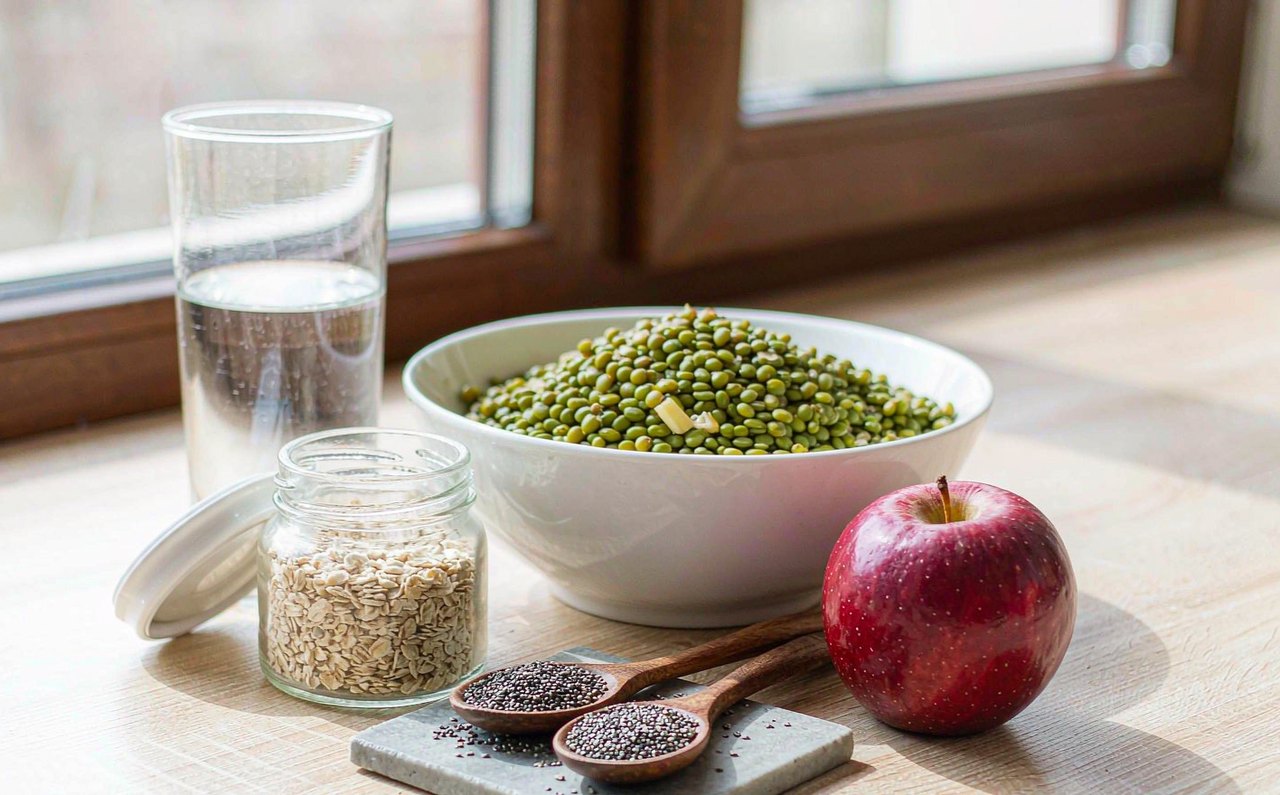
Fiber is the one nutrient where the gap between the recommendation and the average plate is measured in tens of grams, not percentages. Most adults in high-income countries eat somewhere around 15 grams a day. The commonly cited target for adults is 25 grams for women and 38 grams for men, based on 14 grams per 1,000 calories in the U.S. Dietary Guidelines. That is not a small shortfall — it is roughly half of what the guidance asks for, every single day, across years.
The useful question is not "am I eating enough fiber" in the abstract. It is: how many grams are on my plate right now, what would it take to add ten more, and how do I do that without spending a week bloated and miserable? This guide answers those three questions with numbers you can actually count, a plate-by-plate reference, and a ramp plan.
Why fiber is counted in grams, not in servings
"Eat more vegetables" is advice, not a measurement. Grams let you compare foods directly and see where the day went. Two breakfasts can look equally healthy and differ by 8 grams — the difference between a target you hit and one you miss by a third.
The 14-grams-per-1,000-calories figure is the part worth internalizing, because it scales. Someone eating 2,000 calories a day lands at about 28 grams. Someone eating 2,500 lands near 35. Someone on a 1,600-calorie plan is aiming at roughly 22, not 38. Chasing a flat number while eating less food is how people end up overloading on supplements instead of food.
Fiber also arrives attached to volume and water, which is why high-fiber eating tends to be more filling per calorie. A cup of cooked lentils and a small pastry can carry similar calories; one of them carries 15 grams of fiber and keeps you full for three hours.
What 30 grams looks like on a plate
Numbers on a label are abstract until they map to a meal. These are approximate cooked or ready-to-eat amounts, rounded, and they are the ones worth memorizing:
- Lentils, 1 cup cooked — about 15 g. The single highest-yield swap in most kitchens.
- Black beans, 1 cup — about 15 g. Same story, different texture.
- Rolled oats, 1/2 cup dry — about 4 g.
- Chia seeds, 2 tablespoons — about 9 g. Easy to hide in yogurt.
- Almonds, 1 ounce (about 23 nuts) — about 3.5 g.
- Apple or pear with skin — about 4 to 5 g.
- Raspberries, 1 cup — about 8 g.
- Broccoli, 1 cup cooked — about 5 g.
- Whole-wheat bread, 1 slice — about 2 g. This is where white bread quietly costs you.
- Brown rice, 1 cup cooked — about 3.5 g.
Stack those into a day and the target stops looking exotic. Oats with chia and berries (about 21 g) plus a lentil lunch (15 g) already clears 35 before dinner. The reason most people sit at 15 is not that they avoid fiber deliberately — it is that their default breakfast is a pastry or nothing, their default lunch is a white-carb base, and their default snack is something from a wrapper.
Soluble, insoluble, and why the split matters
Fiber is not one substance. Soluble fiber — oats, barley, beans, apples, psyllium — forms a gel in water and slows the pace at which the stomach empties. Insoluble fiber — wheat bran, vegetable skins, whole grains — adds bulk and moves things along. Most whole foods carry both, in different ratios.
The practical consequence: a day built only on bran cereal can feel harsh, while a day built only on soft fruit can leave you hungry. Mixing sources gets you both effects without overdoing either. It also spreads the load across meals, which matters more than most people expect — 25 grams at dinner is a very different experience from 8 grams at each of three meals.
A three-week ramp that does not wreck your gut
Going from 12 grams to 35 grams overnight is the single most common reason people abandon fiber. The gut bacteria that ferment fiber need time to adjust, and the gas they produce during that adjustment is real. Add roughly 5 grams a week, not 20 grams a day.
Week one: fix breakfast only. Pick one change and hold it for seven days — oats instead of toast, or a tablespoon of chia in whatever you already eat, or a piece of fruit with the coffee you already drink. Expected gain: 4 to 6 grams a day. Do not change anything else.
Week two: convert one grain. Swap white rice, pasta, or bread for a whole-grain version at one meal, and add a half-cup of beans or lentils to a meal you already cook. Expected gain: another 5 to 8 grams. This is where most people cross 20.
Week three: add a vegetable to two meals. Not a new recipe — a handful of frozen broccoli into the pasta water, spinach into the eggs, cucumber and tomato on the sandwich. Expected gain: 4 to 6 grams. You should now be sitting between 25 and 32 grams.
If you get bloating or cramping at any step, hold that step for an extra week rather than pushing through. Slow is not failure; slow is the plan working.
Water, timing, and the mistakes people make
- Adding fiber without water. Fiber holds water. Increase both together, or you trade one problem for another. A reasonable habit is a glass of water with every meal that contains beans, oats, or bran.
- Front-loading the day. A 20-gram breakfast after months at 10 grams is a recipe for an uncomfortable morning. Spread it: 8 to 10 grams per meal.
- Trusting "whole grain" on the front of the box. The front is marketing. The back tells you: divide grams of fiber per serving by the serving size in grams. Below about 1 gram of fiber per 10 grams of product is not a whole-grain food in any meaningful sense.
- Forgetting skins and peels. Peeling an apple, a potato, or a cucumber removes a meaningful share of the fiber. Wash instead of peel when the recipe allows it.
- Supplementing too early. Powders and gummies are useful for closing a 5-gram gap, not for replacing food. They also tend to arrive with a large single dose — exactly the pattern that causes discomfort.
Reading a label in ten seconds
Two numbers on the nutrition panel do all the work: dietary fiber per serving, and servings per container. A bag of "fiber-rich" granola with 5 grams per serving and five servings per bag is a 25-gram bag — and if you eat a third of it, you got under 9 grams. Multiply before you believe the claim.
The same trick exposes bread. A loaf advertising "12 grams of whole grains per slice" may carry 2 grams of fiber. Whole grains and fiber are related but not identical; only the fiber line is the fiber line.
When fiber is not the answer
If you have a diagnosed digestive condition — IBS, inflammatory bowel disease, a history of bowel obstruction — the general advice above may not apply, and some people are specifically advised to reduce certain fibers. Fiber also affects how quickly some medications are absorbed, so timing matters for thyroid medication and certain others. Those are conversations to have with a clinician or pharmacist who knows your history, not decisions to make from a general guide.
And if your goal is simply to feel less hungry between meals, fiber is one lever among several: protein at each meal, regular meal timing, and sleep all pull on the same rope. Fiber is the cheapest of them, which is why it is worth starting here.
Three breakfasts, counted
Breakfast is where the day is won, because it is the meal people are most willing to repeat. Three options, same effort level, very different math:
- Two slices of white toast with butter and jam — about 2 g of fiber, 300 calories. This is the default in a lot of homes, and it is why the daily total stalls near 15.
- Oats (1/2 cup dry) with 2 tablespoons of chia and a cup of raspberries — about 21 g of fiber, roughly 400 calories. Twenty-one grams before nine in the morning changes the whole day's arithmetic.
- Greek yogurt with 1/3 cup of bran cereal and a pear — about 12 g of fiber, roughly 320 calories. The fastest option of the three, and the one that travels best.
Notice that none of them require cooking skill. The gap between option one and option two is 19 grams — most of the distance between a typical day and the recommendation, decided in about four minutes at the counter.
Eating out without losing the thread
Restaurant meals are not built for fiber, but a few ordering habits move the number without turning dinner into a lecture. Choose the bean or lentil dish when it appears on the menu; ask for the whole-grain option where one exists; order a side of vegetables instead of fries once a week and see whether you miss them. A burrito bowl with black beans and extra vegetables lands near 15 grams; the same bowl with white rice and no beans lands near 6. The difference is not virtue, it is two scoops.
Travel and takeout weeks are where good intentions die, so pick one anchor food you can find anywhere — a piece of fruit at a convenience store, a packet of oats in a hotel breakfast — and let that be the floor. A day at 18 grams during a bad week is not a failure; it is a maintained habit.
The takeaway
Aim at 14 grams per 1,000 calories rather than a single magic number. Memorize four foods — lentils, oats, chia, berries — because four is enough to move a day by 20 grams. Add five grams a week, drink water alongside, and read the fiber line on the back of the package instead of the claim on the front. Three weeks of that is a more durable change than any reset diet, and it does not require giving up a single food you like. If you are building the rest of the plate around this, our guide to how much protein you actually need covers the other half of the equation, and the blog index has the rest of the nutrition and habit guides.
This article is general health information, not medical advice. Fiber needs vary with age, medications, and digestive conditions. If you have a diagnosed digestive disorder, take medication that interacts with food, or notice persistent pain or a lasting change in bowel habits, talk to a qualified healthcare professional before making significant changes.
A note on health advice
This guide shares general wellbeing information based on published guidance and personal testing. It is not medical advice. If you have a condition, are pregnant, or feel pain during any movement, check with a qualified professional before starting.