Exercise Snacks: Do Short Bursts Really Work?
Can a 60-second stair climb or a 20-second sprint count as real exercise? What the research on "exercise snacks" actually found, how to build bursts into a normal day, and who should hold back.
By the Wellspring Daily editorial team · How we check our guides
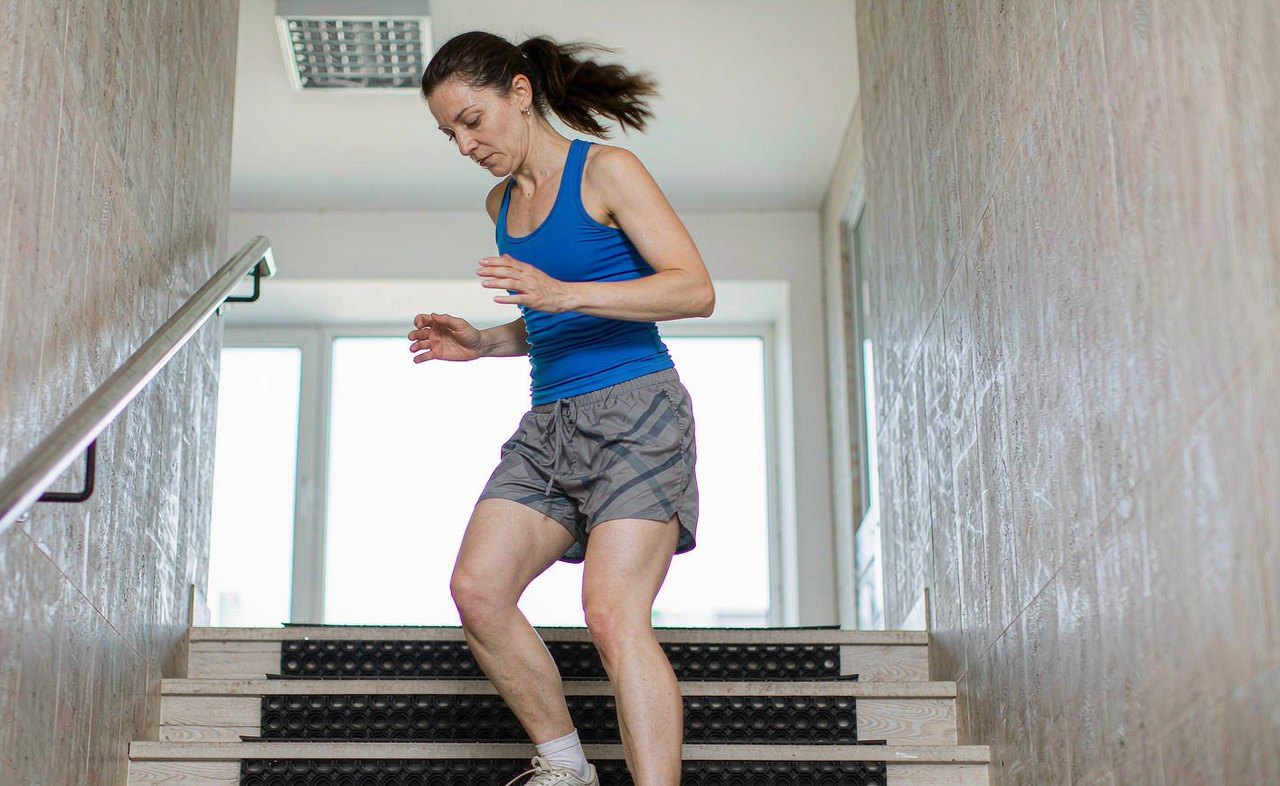
The biggest barrier to exercise is rarely motivation — it is the belief that a workout only counts if it lasts 45 minutes, requires a change of clothes, and happens at a gym. A growing body of research challenges that assumption. Short, hard bursts of activity wedged into ordinary life — climbing stairs for a minute, doing 20 seconds of fast stepping before lunch — measurably improve fitness markers. Researchers call these fragments "exercise snacks," and the evidence behind them is more solid than the cute name suggests.
This article explains what the studies actually found, what a realistic snack looks like, how to program a day of them, and where the approach genuinely falls short. As always on this site, this is general information, not personal medical advice — if you have heart disease, uncontrolled blood pressure, joint problems, or you are new to vigorous exercise, talk to your doctor before adding hard bursts.
What counts as an exercise snack
Two related ideas appear in the research, and they are worth separating:
- Structured exercise snacks: deliberate bouts of vigorous activity lasting from about 20 seconds to 5 minutes, done with real effort — fast stair climbing, hill sprints, bodyweight circuits like squats and push-ups, or hard cycling on a stationary bike. You choose to do them, you can count them.
- Vigorous intermittent lifestyle physical activity (VILPA): the accidental version — hurrying with groceries, chasing a bus, a brisk uphill walk that leaves you slightly breathless. Researchers began tracking this only after fitness trackers made it measurable.
Both share one requirement: the effort must reach a vigorous level. A slow stroll to the printer is not a snack. A practical test: during the burst you should be unable to sing, and by the end you should be breathing hard enough that holding a conversation is difficult. The talk test is crude but reliable, and it needs no equipment.
What the research actually found
The headline results come from large observational studies that used wrist-worn trackers, plus a handful of small controlled trials. Numbers from observational studies show association, not proof — but the dose-response patterns are consistent enough to take seriously.
| Study focus | Dose studied | Reported association |
|---|---|---|
| VILPA and mortality (about 25,000 non-exercising adults, tracker data) | 3–4 vigorous bursts of 1–2 min per day | roughly 26–30% lower all-cause mortality risk versus no vigorous bursts; cardiovascular mortality signals even larger |
| The same dataset, Cancer and CVD endpoints | a minimum of ~3 bursts daily, ~4.4 min total | meaningful risk differences appeared well below the 20–30 min guideline level |
| Stair-climbing "snacking" trial (young sedentary adults) | 3 × 60-second vigorous stair climbs, 3 days per week, 6 weeks | measurable improvement in aerobic fitness (VO2max trend) versus no exercise |
| Short sprint-interval trials | 3 × ~20-second all-out sprints within a 10-minute session, 3×/week | improved cardiorespiratory fitness and insulin sensitivity markers comparable to longer moderate training in some measures |
Two honest caveats belong next to that table. First, the mortality findings come from observational data: people who take stairs hard may differ in other health-relevant ways. Second, the controlled trials are small — often 20 to 50 participants over 6 to 12 weeks. What the field agrees on is direction and plausibility: vigorous bursts push heart rate high, and even short doses repeated daily accumulate meaningful stimulus.
Why such short doses can work at all
Traditional guidelines (150 minutes of moderate activity per week, or about 75 minutes vigorous) are built around total dose. Exercise snacks attack a different variable: intensity. Vigorous effort recruits a large fraction of muscle mass, drives heart rate toward its higher zones within seconds, and triggers the same signaling pathways — mitochondrial biogenesis, improved insulin sensitivity — that longer sessions activate. The stimulus appears to be strongly driven by the hardest seconds of work, not just the duration.
There is also a behavioral mechanism that matters as much as the physiology. A one-minute snack has almost no friction: no commute, no outfit, no shower logistics. The people who fail at gym routines usually fail at the logistics, not the exercise. Snacks convert dead minutes — waiting for coffee, a meeting break, the time before the microwave finishes — into training volume.
A practical day of snacks
Here is a template that fits a standard office or work-from-home day and adds up to roughly 8–12 minutes of hard effort without feeling like a program:
| When | Snack | Duration |
|---|---|---|
| Morning, after arriving | Brisk stair climbs — up 2 flights, walk down, repeat | 2–3 min |
| Mid-morning break | Bodyweight circuit: 10 squats, 10 push-ups (wall or knee versions are fine), 20-second fast march in place — 3 rounds | 3 min |
| Lunch, after eating | Vigorous uphill or fast walk around the block | 3–4 min |
| Afternoon slump | One all-out effort: fast stairs, jumping jacks, or high knees | 1 min |
Three rules keep this honest and sustainable:
- Effort before volume. One genuinely hard minute beats five easy ones. Use the talk test.
- Ceiling before progression. Start with 2–3 snacks per day for two weeks. Snacks are meant to stack on top of whatever walking or training you already do, not to replace a real workout habit if you have one.
- Respect the spine and joints. Stair work and jumping stress knees, hips and calves. If a burst produces joint pain that lingers past the next morning, switch to lower-impact versions: hard stationary cycling, hill walking, or stair climbing at a controlled pace.
What snacks cannot do
The limits matter as much as the benefits. Exercise snacks reliably improve aerobic fitness markers and appear to lower mortality risk, but they are weak substitutes for strength training: building muscle and bone density requires progressive resistance — heavier loads over weeks — which a one-minute bodyweight burst cannot deliver. If muscle or bone health is your goal, pair snacks with a simple strength routine; our guide to a beginner dumbbell workout at home covers the progression logic, and resistance band basics work when space or budget is tight.
Snacks also do not manage weight on their own. The energy cost of ten hard minutes is real but modest, and vigorous hunger signals can quietly replace the calories burned. Weight outcomes depend mostly on food patterns — portion control without counting discusses that side honestly.
Finally, the evidence base is youngest for older adults and people with chronic conditions. Tracker-based studies included middle-aged and older participants and found benefits there, but anyone with cardiovascular history should treat vigorous bursts as a medical question first, not a productivity hack.
Common failure modes and how to fix them
| Problem | Usual cause | Fix |
|---|---|---|
| Snacks feel pointless after a week | Effort too low — the bursts never reached vigorous | Time one snack: count reps in 20 seconds, then try to beat the count next day |
| Dizziness or nausea after bursts | Snack done immediately after a large meal, or sudden stand-up after hours of sitting | Wait 45–60 minutes after big meals; do a 10-second easy warm-up before going hard |
| Calf or knee soreness that builds over days | Too much jumping or stair volume too early | Cut frequency to 2 snacks/day, switch to cycling or hill walking, resume gradually |
| Heart rate stays low despite feeling busy | "Busy" movements (tidying, slow walking) mistaken for vigorous work | Apply the talk test strictly; if you can chat comfortably, it is not a snack |
| Fitness improves then plateaus | Same snack, same effort, for months | Progress one variable: more rounds, steeper stairs, longer sprint, or add light resistance |
Who should be cautious
Talk to a clinician first if any of these apply: known heart disease, chest pain or unexplained breathlessness during exertion, uncontrolled high blood pressure, a recent cardiac event, pregnancy with complications, or severe joint disease. Vigorous intensity is precisely the zone where underlying problems announce themselves. For everyone else, the worst realistic outcome of a sensibly progressed snack routine is a day of muscle soreness — and that is a normal training response, not damage.
The bottom line
Exercise snacks will not turn you into an athlete, and they are not a license to skip strength work. But the core claim survives scrutiny: several hard minutes a day, taken in pieces, produce real fitness and health signals. If your current exercise total is zero, three genuine one-minute bursts spread across the day is a legitimate starting point — and an easier promise to keep than any gym membership. When you are ready to build a fuller routine, our guides on warming up properly, rest and recovery, and daily step counts cover the pieces around it.
This article is general health information, not medical advice. It does not diagnose or treat any condition. Consult a qualified healthcare professional before starting vigorous exercise, especially if you have existing health conditions.
A note on health advice
This guide shares general wellbeing information based on published guidance and personal testing. It is not medical advice. If you have a condition, are pregnant, or feel pain during any movement, check with a qualified professional before starting.