A Walk After Meals: What It Actually Does
A 10-15 minute walk after eating smooths the post-meal glucose response, aids digestion, and beats the afternoon slump. Timing, expectations, and how to make it stick.
By the Wellspring Daily editorial team · How we check our guides
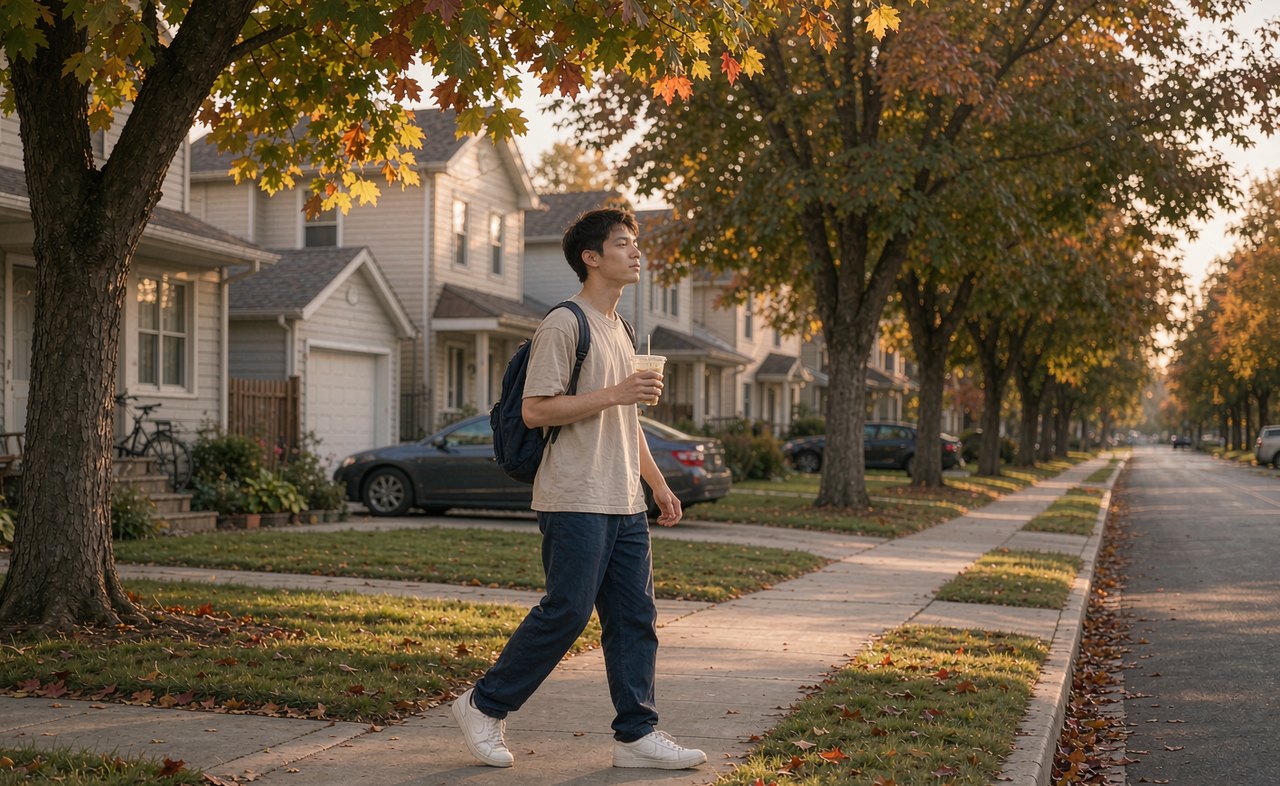
The post-meal slump is one of the most predictable feelings in a normal day: lunch ends, and within the hour your eyelids are heavy and the afternoon stretches out like a wall. Among the many habits suggested for this - caffeine cut-offs, smaller portions, protein-first eating - one of the simplest is also one of the best studied: a short walk after eating. Not a workout, not a scheduled training block, just ten to fifteen minutes on your feet, ideally within half an hour of putting the fork down.
What actually happens when you do this is more interesting than the generic advice suggests. There are real, measurable changes in how your body handles the meal, and there are also benefits the marketing of "walking apps" tends to overstate. Here is what the walk does and does not do, how to make the habit survive a real workday, and how to adapt it when the weather, your joints, or your schedule refuse to cooperate.
What a Post-Meal Walk Actually Does
When you eat, carbohydrate is broken down into glucose, which enters the bloodstream and either gets used for energy or stored. After a large or fast-digesting meal, blood glucose rises; how high and how long it stays elevated depends on the meal, your body, and - this is the part that matters here - what your muscles are doing while it happens. Working muscles pull glucose out of the blood for fuel without needing as much insulin to make that happen. Walking is the easiest way to make your muscles work at exactly the moment glucose is arriving.
The measurable result in studies of ordinary, non-athlete adults: a short walk after a meal blunts the post-meal glucose peak compared with sitting, and spreading even light activity across the day - for example, brief walks after each meal rather than one long walk at night - produces a smoother pattern overall. You do not need a glucose monitor to benefit, but if you wear one, the flattening is usually visible within days, which makes this one of the few habits with immediate, personal feedback.
Second effect: digestion feels better for many people. Gentle movement encourages the stomach and intestines to keep things moving, which is why a stroll after dinner is a folk remedy for bloating in a great many cultures - and why it has held up reasonably well in practice. Third: the walk replaces the default alternative, which is sitting. Energy and alertness after lunch improve partly because of the walk and partly because you are not parked in a chair staring at a screen while the slump arrives.
What It Does Not Do
Honest expectations keep habits alive, so three boundaries are worth stating plainly:
- It does not "erase" the meal. A 15-minute walk at a casual pace burns roughly 40 to 70 calories depending on your body and pace. It is not a cancellation mechanism, and treating it as one leads to eating more and walking further, which is a worse version of both habits.
- It is not a substitute for regular exercise. General health guidance still points to about 150 minutes a week of moderate aerobic activity plus muscle-strengthening work. Post-meal walks contribute minutes, but the walk is a timing strategy, not a training program.
- It does not fix a chaotic diet. A flat glucose curve after a pastry-and-juice breakfast is still the curve of a pastry-and-juice breakfast. The walk smooths the shape of the response; it does not change what the response is to.
With that framing, the walk is a low-cost add-on that improves the handling of meals you were going to eat anyway. That is exactly the kind of habit worth building, because it asks nothing of your willpower at the moment of choice beyond standing up.
The Timing: How Soon and How Long
The evidence and practical experience converge on a simple window: start walking within about 30 minutes of finishing the meal, and keep it to 10 to 15 minutes at a pace where you can hold a conversation. Going sooner is slightly better than later for the glucose effect, because the walk overlaps the period when glucose is rising fastest - typically the first 30 to 60 minutes after eating. Waiting an hour is not useless, it just misses the steepest part of the curve.
Longer is not clearly better. A 45-minute post-lunch walk has a real cost - time, and for many workers, the schedule chaos it creates - while the marginal benefit over 15 minutes is small for general health purposes. If you want more movement in your day, add it elsewhere: a longer walk at another time serves training goals, while these short walks serve the meal-response goal.
| Goal | Timing | Duration | Pace |
|---|---|---|---|
| Smooth the post-meal response | Within 30 min of the last bite | 10-15 min | Conversational |
| Break up a desk-bound afternoon | Same window, plus mid-morning | 5-10 min | Any |
| Support overall activity minutes | Anytime, separate from meals | 20-40 min | Brisk |
Making It Survive a Real Workday
The failure mode of this habit is predictable: it works beautifully on a quiet Sunday and disappears on a Tuesday. The fix is to attach the walk to the meal itself and make it absurdly easy to start:
- Anchor it to the plate, not the clock. The trigger is "stood up from eating", not "2:15 PM". Habits attached to events survive schedule chaos; habits attached to clock times do not.
- Prepare the route, not the motivation. Decide in advance: a loop of the block, a trip to the mailboxes, one floor of the parking garage, or - for office workers - a walk to the far end of the building and back. When the route is pre-decided, the walk starts before the negotiation with yourself does.
- Lower the dress code. Casual shoes that live by the door, a jacket by the exit, no "changing into workout gear" step. The friction budget for a 12-minute walk should be near zero.
- Give it a companion purpose where possible. A phone call, a podcast segment, or a perambulatory catch-up with a colleague turns the walk into something you look forward to rather than a chore with health branding.
- Track streaks lightly. A calendar with a checkmark after each post-meal walk is enough. The point is seeing the pattern, not hitting a number.
Variations for Weather, Joints, and Small Spaces
Bad weather, a sore knee, or a cubicle farm do not have to end the habit. What matters is that your large leg muscles are contracting while glucose arrives, and there are several ways to arrange that:
- Indoor loops. Hallways, stairwells, the inside of a mall, or simply pacing during a phone call. Two minutes per floor of stairs is more vigorous than flat walking - fine, but optional.
- Marching or stepping in place. Ten minutes of stepping in front of the TV after dinner looks silly and works completely. Lifting the knees to roughly hip height keeps the effort meaningful.
- Light household movement. Tidying, washing dishes standing up, folding laundry while standing and shifting weight - the effect comes from being on your feet and moving, not from the scenery.
- Tender joints. Shorter, more frequent bouts are friendlier than one long one. Flat, cushioned routes help; a walking stick takes pressure off a sore side. If a joint consistently hurts for more than a day after walking, that is a question for a clinician, not a persistence problem.
How It Fits With the Rest of Your Eating Habits
Post-meal walking composes well with other meal-related habits because it changes timing rather than content. Paired with the food-order approach - vegetables and protein before starch - the glucose curve flattens twice over, once from what arrives first and once from the muscles using what arrives. Paired with sensible portions, the walk shortens the post-meal dip that makes 3 PM snacking feel mandatory. None of these replace the others; they stack.
One caution about stacking: do not launch five habits in a week. The walk alone, done after lunch and dinner on weekdays, is already 100 minutes of gentle movement a week that did not exist before. Lock that in for a month before adding anything else - which, if you want a framework for making additions stick, is exactly what the habit-building guide on this site is for.
The General Health Note
For most people a post-meal walk is about as risky as a stroll to the mailbox, and the main danger is a wet pavement rather than the exercise itself. That said, this is general information, not medical advice: if you have diabetes and use insulin or other glucose-lowering medication, exercise changes how your body uses glucose, so your care team should help you time food, medication, and movement together. If you have a heart or lung condition, are pregnant, or have been told to limit activity, ask your clinician what amount and intensity is right for you - the answer is rarely zero, but it should be your answer, not a blog's.
Stop any walk that produces chest discomfort, unusual breathlessness, dizziness, or pain, and seek medical advice if those symptoms recur. Everyone else: shoes on, route chosen, and the next meal is your first rep. If you are starting from a fully sedentary day, the walking-for-exercise plan covers how to build volume safely over four weeks, and the sleep-schedule reset explains why the same "anchor to an event, not a clock" logic fixes more than just this habit.
A note on health advice
This guide shares general wellbeing information based on published guidance and personal testing. It is not medical advice. If you have a condition, are pregnant, or feel pain during any movement, check with a qualified professional before starting.