Protein Timing: Does It Actually Matter? What Evidence Says
The 30-minute anabolic window is one of fitness marketing's favorite claims. Here is what controlled studies actually show about when to eat protein, how much per meal, and the two situations where timing genuinely matters.
By the Wellspring Daily editorial team · How we check our guides
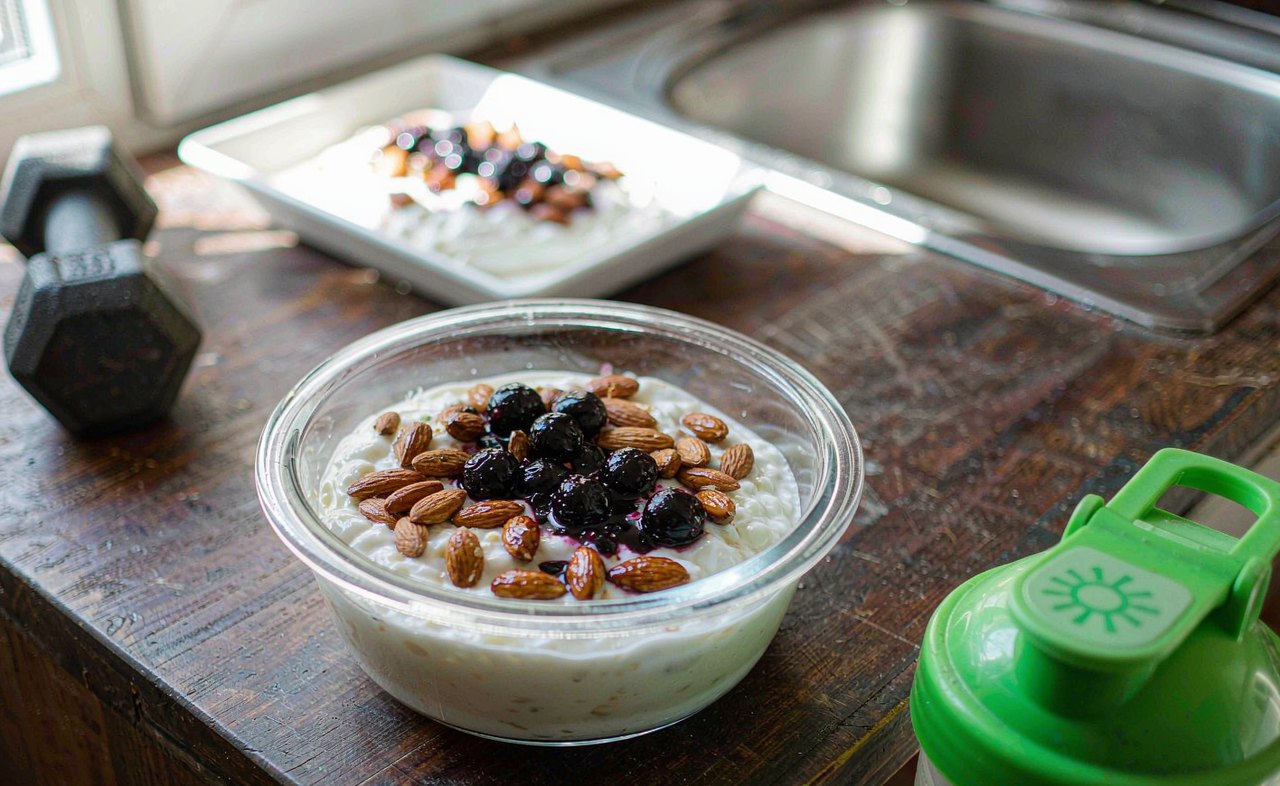
Ask five gym-goers when to drink their protein shake and you will hear five confident answers: within thirty minutes, within an hour, immediately post-workout, before the workout, before bed. The subject of protein timing is surrounded by more certainty than the research behind it deserves. The good news is that the evidence paints a reassuring picture for most people: what matters far more than timing is how much protein you eat across the whole day. There are, however, two specific situations where timing genuinely shifts the needle, and a handful of practical spacing habits that cost nothing and remove the guesswork entirely. This article walks through what the controlled studies measured, what the numbers mean for your own bodyweight, and where timing claims have simply outgrown their data.
What the research actually compared
The landmark work here is a 2013 meta-analysis by Schoenfeld and colleagues, which pooled studies comparing protein consumed close to a workout (within a few hours either side) against the same total daily protein consumed at other times. The first version of the analysis reported a modest benefit for timing - but the authors themselves flagged a catch: the timed groups in those studies ate more total protein than the control groups, so the advantage could not be separated from simply eating more protein overall. A 2017 follow-up addressed that flaw directly by comparing groups matched for total daily protein. This time the timing advantage disappeared. Total daily intake predicted muscle and strength outcomes; the position of any single meal relative to the workout did not.
Other well-controlled trials point the same way. Studies giving whey protein immediately before versus immediately after resistance training found essentially identical gains over weeks to months. One frequently cited trial by Tipton and colleagues had participants drink the same whey shake either just before or just after training and measured muscle protein synthesis directly - the response did not differ meaningfully by order. Taken together, the research base supports a clear statement: for people eating protein in ordinary amounts across the day, the precise minutes around a workout add little that the daily total has not already delivered.
The anabolic window: where the 30-minute rule came from
The origin of the post-workout window is real science that got simplified into marketing. Muscle protein synthesis - the process by which muscle repairs and grows after training - is elevated after exercise and again after eating protein. Early studies suggested the post-exercise elevation was transient, implying a limited window during which protein would be maximally used. What later work showed is that the window is far wider than thirty minutes, particularly when the training session follows a meal. If you ate a protein-containing meal within the three to four hours before training, the amino acids from that meal are still circulating in your blood during and after the session - your body is already in the window before you finish your last set.
The one situation where post-workout timing has real teeth is fasted training. If you train in the morning having eaten nothing for ten or more hours, you genuinely begin the session with low circulating amino acids, and a protein serving soon after - ideally within the hour, though research has not fixed a hard cutoff - closes that gap meaningfully sooner than waiting until lunch. This is the edge case, not the rule: it applies to the pre-dawn trainee on an empty stomach, not to the after-work lifter who ate lunch at one.
How much protein per meal actually does something
Timing matters less, but the amount per meal matters more than most people assume. Muscle protein synthesis responds to a dose above a threshold: below roughly 0.25 grams per kilogram of bodyweight per meal (about 20 grams for a 75-80 kg adult), the response is small; somewhere between 20 and 40 grams per meal, the response approaches its practical ceiling. Research by Moore and colleagues mapped this dose-response curve in young adults and found the plateau near 20-25 grams for quality animal proteins; later work by Macnaughton comparing 20 versus 40 grams after full-body training found the larger dose produced a greater response - particularly relevant for people with more muscle mass or those training whole-body rather than single limbs.
Translating that into meals is straightforward. A 75 kg adult aiming for the commonly recommended training range of 1.6-2.2 grams of protein per kilogram per day needs 120-165 grams daily. Spread across three or four eating occasions, that is 30-45 grams per meal - comfortably at or above the per-meal threshold, and one of the reasons the daily total dominates: when each meal carries enough protein, no single meal needs rescue by a timer.
| Bodyweight | Daily target (1.6-2.2 g/kg) | Per meal, 4 meals | Per meal, 3 meals |
|---|---|---|---|
| 60 kg | 96-132 g | 24-33 g | 32-44 g |
| 75 kg | 120-165 g | 30-41 g | 40-55 g |
| 90 kg | 144-198 g | 36-50 g | 48-66 g |
For perspective on what those numbers mean in food: 30 grams of protein is roughly a cup of Greek yogurt (about 17-20 g) plus a handful of almonds (about 6 g), or a palm-sized chicken breast (about 25-30 g), or three eggs (about 18 g) plus a glass of milk (about 8 g). None of this requires a supplement - it requires meals built around a protein anchor, which is the habit that carries nearly all the benefit.
Practical spacing: the only timing habit worth keeping
The evidence-based version of protein timing is not a stopwatch around workouts; it is even spacing across the day. Muscle protein synthesis responds to each protein-containing meal and returns toward baseline within a few hours, so hitting the per-meal threshold three or four times across the waking day keeps the response repeatedly activated. In practice: anchor breakfast with protein (many people's mornings skew heavily carbohydrate - toast, cereal, fruit - and land near 10 grams when the threshold is 25-40), aim for 3-5 hours between protein meals rather than stacking everything into one dinner, and treat the daily total as the headline number with spacing as the supporting detail.
Pre-sleep protein is the one spacing tweak with direct trial evidence behind it. A Dutch study by Snijders and colleagues gave young men doing twelve weeks of resistance training either a casein protein serving (about 27-40 grams) or a placebo every night before sleep; the pre-sleep protein group gained more muscle mass and strength over the same training program. The mechanism is plausible - overnight is the longest stretch without amino acids, and slow-digesting casein drip-feeds them through it. This does not mean dessert becomes mandatory; it means that if your last meal is early and training days are frequent, a protein-containing evening snack is one of the few timing choices with trial support rather than marketing behind it.
Edge cases where the picture changes
| Situation | What changes | Practical adjustment |
|---|---|---|
| Training fasted (morning, 10+ hours since food) | Post-workout protein has genuine urgency | Protein within about an hour after the session |
| Older adults | Anabolic resistance: the per-meal threshold shifts upward, toward 40 g | Larger single servings, fewer grazing-style snacks |
| Mostly plant-based eating | Leucine content per gram is lower in many plant proteins | Slightly larger per-meal portions or complementary sources |
| One large meal per day | Single doses above ~70-100 g show diminishing synthesis returns | Split the daily total across two eating occasions if possible |
Two caveats deserve honest framing. The anabolic resistance research in older adults is observational and dose-response work rather than long-term outcome trials, so the "40 grams for over-50s" figure is a reasoned adjustment, not a proven prescription. And the leucine differences between plant proteins vary a lot by source - soy and pea proteins fare better in comparison than the older literature assumed. None of this changes the headline: the daily total, adequate per-meal amounts, and consistent training do the heavy lifting for every group.
What to stop worrying about
Several timing claims have outlived their evidence and can be retired without loss. The hard thirty-minute window: unsupported for anyone who ate in the hours before training. The idea that protein eaten "late" is wasted or stored as fat differently: no controlled trial supports it, and pre-sleep protein trials show the opposite - overnight protein is used. BCAA products between meals: they are simply leucine-containing protein fragments, and they add nothing once total protein is adequate; whole protein sources contain them already. And the practice of timing protein around workouts while daily intake sits below target is optimizing the last five percent while skipping the fifty: if you fix only one number, fix the daily total.
Putting it together
Here is the complete evidence-based protocol, stripped of everything the data does not support. Set your daily protein target in the 1.6-2.2 grams per kilogram range (or, without weighing food, build every meal around a palm-to-two-palms portion of protein). Anchor breakfast so it is not the weakest meal of the day. Space protein-containing meals 3-5 hours apart rather than stacking them. If you train fasted, eat protein within about an hour afterward - the one place where the stopwatch earns its keep. On heavy training days, an evening protein snack is a reasonable, evidence-supported addition. Everything else - the alarms, the shaker bottles staged by the door, the fear of missing the window by eleven minutes - is habit theater, and letting go of it makes the diet easier to sustain, which is itself the strongest predictor of results over months and years.
This article is general health information, not medical advice. It does not diagnose or treat any condition. Individual protein needs vary with health status, kidney function, and medical context; consult a qualified healthcare professional or registered dietitian before making significant dietary changes, especially if you have a medical condition.
A note on health advice
This guide shares general wellbeing information based on published guidance and personal testing. It is not medical advice. If you have a condition, are pregnant, or feel pain during any movement, check with a qualified professional before starting.